What is Tartar?
minute read


Tartar, sometimes called calculus, is plaque that has hardened on your teeth. Tartar can also form at and underneath the gumline and can irritate gum tissues. Tartar gives plaque more surface area on which to grow and a much stickier surface to adhere, which can lead to more serious conditions, such as cavities and gum disease.
Not only can tartar threaten the health of your teeth and gums, it is also a cosmetic problem. Because tartar is more porous, it absorbs stains easily. So if you are a coffee or tea drinker, or if you smoke, it is especially important to prevent tartar buildup.
Unlike plaque, which is a colorless film of bacteria, tartar is a mineral buildup that's fairly easy to see if above the gumline. The most common sign of tartar is a yellow or brown color to teeth or gums. The only way for sure to detect tartar — and to remove it — is to see your dentist.
Proper brushing, especially with a tartar control toothpaste, and flossing are necessary to reduce plaque and tartar buildup.
Once tartar has formed, only your dentist or hygienist can remove it. The process for removing tartar is called scaling. During a scaling, the dentist or hygienist uses special instruments to remove tartar from your teeth above and below the gumline.
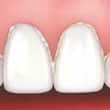 | 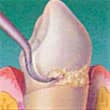 |
Tartar threatens good oral health and makes your smile noticeably less attractive. | Once tartar forms, only a professional cleaning can remove it. |
11/15/2010