Bruxism: Signs and Symptoms
minute read


If you find yourself waking up with sore jaw muscles or a headache, you may be suffering from bruxism — the grinding and clenching of teeth. Bruxism can cause teeth to become painful or loose, and sometimes parts of the teeth are literally ground away. Eventually, bruxism can destroy the surrounding bone and gum tissue. It can also lead to problems involving the jaw joint, such as temporomandibular joint syndrome (TMJ).
For many people, bruxism is an unconscious habit. They may not even realize they're doing it until someone comments that they make a horrible grinding sound while sleeping. For others, a routine dental checkup is when they discover their teeth are worn or their tooth enamel is fractured.
Other potential signs of bruxism include aching in the face, head and neck. Your dentist can make an accurate diagnosis and determine if the source of facial pain is a result from bruxism.
The appropriate treatment for you will depend on what is causing the problem. By asking careful questions and thoroughly examining your teeth, your dentist can help you determine the potential source of your bruxism. Based on the amount of tooth damage and its likely cause, your dentist may suggest:
• 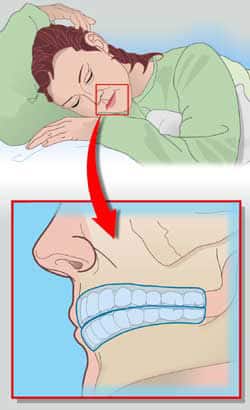 |
| An appliance worn while sleeping will protect your teeth, but is not a cure. |
This article is intended to promote understanding of and knowledge about general oral health topics. It is not intended to be a substitute for professional advice, diagnosis or treatment. Always seek the advice of your dentist or other qualified healthcare provider with any questions you may have regarding a medical condition or treatment.