Fluoride Toothpaste Benefits, Safety and Daily Use
minutes read
Medically Reviewed By Colgate Global Scientific Communications

Fluoride Toothpaste Benefits, Safety and Daily Use
Medically Reviewed By Colgate Global Scientific Communications
Brushing with fluoride toothpaste is one of the most effective ways to improve oral health. It offers oral care that goes far beyond surface cleaning. Below are the key benefits of fluoride toothpaste:
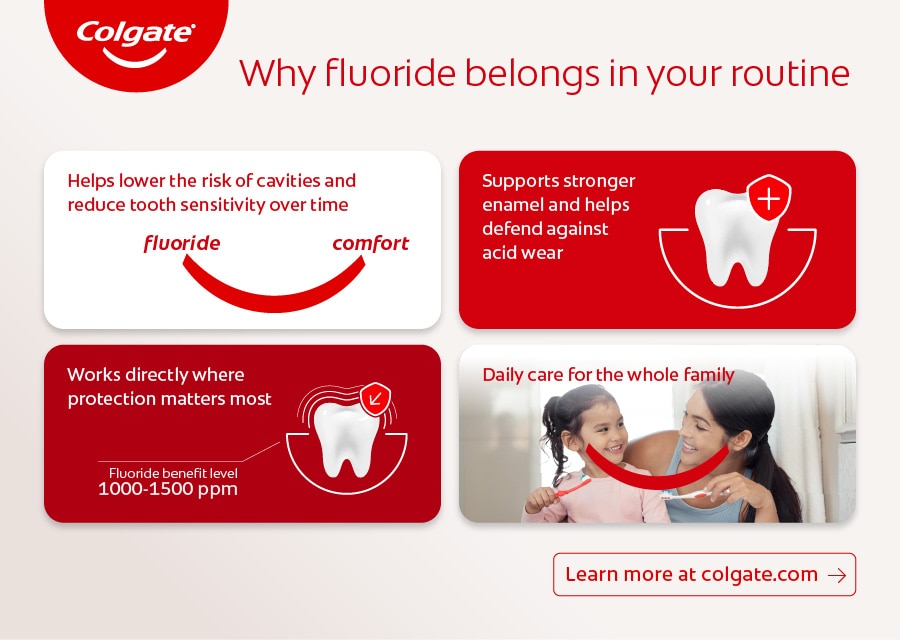
Strengthens tooth enamel: Fluoride remineralises weakened enamel and reverses early signs of decay. Combining fluoride with calcium or phosphate can be more beneficial.
Protects against cavities: Regular use creates a shield on your teeth that helps avoid tooth decay and plaque buildup.
Prevents acid attacks: Fluoride toothpaste helps protect against acid attacks by strengthening tooth enamel, enhancing remineralisation, and interfering with bacteria that produce acid.
Reduces sensitivity: Fluoride helps seal the exposed dentine, lowering tooth sensitivity over time.
Protects teeth in dry mouth: Fluoride toothpaste is beneficial for people with dry mouth because it helps protect teeth from decay when saliva is insufficient.
Prevents dental caries: By remineralising and strengthening tooth enamel, helping reverse early signs of decay, and inhibiting bacteria, fluoride toothpaste helps in the prevention of dental caries.
Supports gum health: Healthy enamel means better protection from gum disease and tooth root decay.
Long-lasting protection: Even after brushing, fluoride continues to work by binding to saliva and tooth surfaces.
Safe and easy to use: When used correctly, it delivers oral health benefits without side effects.
Understanding how to avoid tooth decay begins with preventive care, not just treatment. Fluoride plays a central role in dental health, keeping teeth strong and healthy for life.
Fluoride is approved by major organisations like the World Health Organisation and the Indian Dental Association. When used correctly, fluoride in toothpaste is safe. It helps keep your teeth strong and healthy. The levels of fluoride in regular toothpaste are controlled to make it safe for both adults and children. Side effects only occur when there is too much fluoride. To stay safe, use a pea-sized amount of toothpaste and avoid swallowing it. Brushing twice a day and spitting out, rather than rinsing, gives all the benefits of fluoridation.
Under 2 years: a smear no bigger than a grain of rice.
2 to 6 years: a pea-sized amount, with an adult supervising.
Adults: a pea-sized amount.
Wondering when kids should start using fluoride toothpaste? Read our guide for parents. Swallowing too much fluoride while teeth are forming can cause dental fluorosis, which is why amounts matter for young children.
The use of fluoride in toothpaste is safe when done correctly, but excessive fluoride intake can cause minor side effects. The key is to choose a dentist-approved toothpaste with a proper amount of fluoride and use it in the right amount each time you brush.
Possible side effects include:
Dental fluorosis may occur in young children who swallow too much toothpaste, which can sometimes cause discolouration on developing teeth.
Mild stomach discomfort may occur if large amounts are ingested accidentally.
White spots or streaks on teeth may occur in rare cases of overuse.
To prevent these issues, always use only a pea-sized amount of paste on your toothbrush. Supervise children when brushing with toothpaste purchased over the counter. Always check the toothpaste ingredients, especially in case of any existing health condition; fluoride-free toothpaste may be recommended for some. Following these guidelines ensures safe use of fluoride while supporting good oral hygiene, keeping teeth healthy without harm.
Choosing the right toothpaste helps protect your teeth and supports any tooth decay treatment recommended by your dentist. It also promotes overall dental health. Here is a step-by-step guide:
Determine whether you need extra cavity protection, whitening, or help with sensitivity.
Look for Sodium Fluoride as an active ingredient. The toothpaste should contain the correct concentration of fluoride, usually 1000–1450 ppm (parts per million) for adults, to ensure safety and effectiveness.
Some toothpaste varieties provide plaque control, tartar prevention, or fresh breath.
Brush twice daily for two minutes using a soft-bristle toothbrush. Spit out the foam, but avoid rinsing immediately to allow fluoride to stay on the enamel longer.
Combine fluoride toothpaste with flossing, mouthwash, and regular dental check-ups. Dentistry experts recommend combining these practices for long-term dental health and wellness.
Products like Colgate Total Advanced Health offer multiple benefits in one formulation, including cavity prevention, gum protection, and antibacterial action. This makes them an excellent option for overall oral care and long-term dental health.
Fluoride is a mineral found naturally in water and the earth’s crust. Its benefits for dental health led to the inclusion of fluoride in toothpaste and fluoridated water in public water supplies. It helps communities maintain good oral healthcare and reduce the risk of problems like tooth decay.
Fluoride works by strengthening the enamel to resist tooth decay and cavities. When bacteria in plaque feed on sugars, they produce acids that decay the tooth enamel. Daily use of fluoride toothpaste helps restore the enamel through remineralisation, making teeth stronger and more resistant to decay. Fluoride also slows bacterial activity, lowering acid production and protecting teeth even in acidic conditions.
Children under two need only a smear of toothpaste, and children aged two to six a pea-sized amount. Dentists may recommend extra fluoride treatment for individuals with weak enamel. Proper use of fluoride toothpaste benefits people of all ages, especially in areas where drinking water contains low fluoride levels. This combination of fluoride from toothpaste, water, and professional treatments keeps teeth healthy and prevents tooth decay over the long term.
Fluoride reduces cavity risk by reinforcing enamel. Enamel constantly gains and loses minerals throughout the day, and when acid exposure outweighs repair, enamel becomes weaker.
This is how fluoride toothpaste works: fluoride combines with calcium and phosphate in saliva to form fluorapatite, a crystal structure that is far more resistant to acid than natural enamel. As a result, enamel becomes stronger and less vulnerable to the acids made by food and bacteria. This is how fluoride prevents cavities and other oral health issues.
Yes. Public water supplies in India are not fluoridated, so for most families fluoride toothpaste is the main daily source of fluoride for teeth. Even where water contains natural fluoride, brushing puts fluoride directly on your teeth for longer and physically removes plaque, giving you extra protection.
Yes. Daily use of fluoride toothpaste is both safe and beneficial. The fluoride concentration in consumer products is specifically designed for regular brushing. It strengthens enamel, protects against decay, and promotes good oral hygiene when used twice a day.
Apply a pea-sized amount on your toothbrush and brush for two minutes. Spit out the paste after brushing, but do not rinse immediately. This allows fluoride to keep working on the enamel. Supervise children while brushing to prevent swallowing.
Toothpaste with fluoride offers stronger protection against cavities and enamel erosion. Fluoride-free options may be suggested for some individuals. However, for most people, fluoride toothpaste is the best choice for complete cavity prevention and overall dental health. Charcoal, herbal and other natural toothpastes can clean teeth and remove surface stains, but not all of them contain fluoride, so check the label if cavity protection matters to you.
Brush twice daily, morning and night. Consistency is key. Overuse does not improve results, but missing daily brushing increases your risk of tooth decay and plaque buildup.
Yes. Enamel loses and regains minerals every day at every age, so adults need fluoride to keep that repair cycle working. That is why dentists recommend it so strongly. Adults with dry mouth, receding gums, braces, crowns or a history of cavities can benefit even more, and your dentist may suggest extra fluoride such as a mouth rinse or gel.
Look for Sodium Fluoride or MonofluoroPhosphate (MFP) as an active ingredient. In India, standard over-the-counter fluoride toothpastes typically contain up to 1,000 ppm (parts per million) of fluoride, which is the recommended level for safe and effective daily cavity. For extra protection, a multi-benefit formula such as Colgate Total Advanced Health adds antigerm protection for teeth, gums, tongue and cheeks.
Fluoride mainly strengthens teeth, but brushing twice a day with fluoride toothpaste also removes the plaque that irritates gums. Some formulas go further: stannous fluoride fights plaque bacteria and helps prevent early gum problems.
This article is intended to promote understanding of and knowledge about general oral health topics. It is not intended to be a substitute for professional advice, diagnosis or treatment. Always seek the advice of your dentist or other qualified healthcare provider with any questions you may have regarding a medical condition or treatment.
ORAL HEALTH QUIZ
Take our Oral Health assessment to get the most from your oral care routine