Burned Gums from Teeth Whitening: What You Need to Know
minute read

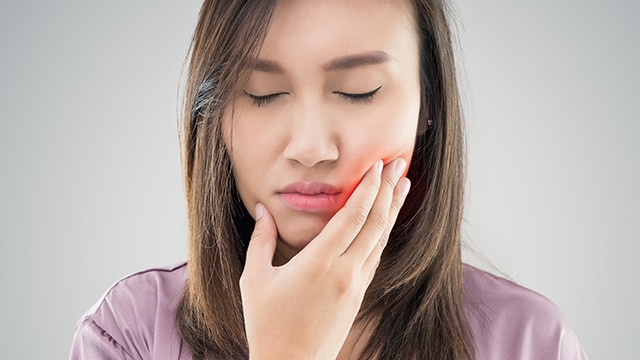
We get that using at-home teeth whitening products fit your budget and your busy schedule. But knowing exactly how whitening your teeth might lead to gum irritation or burnt gums is important to your oral health. Learn how to recognize symptoms of gum irritation and how to soothe your gums. Better yet, learn how to prevent burning your gums.
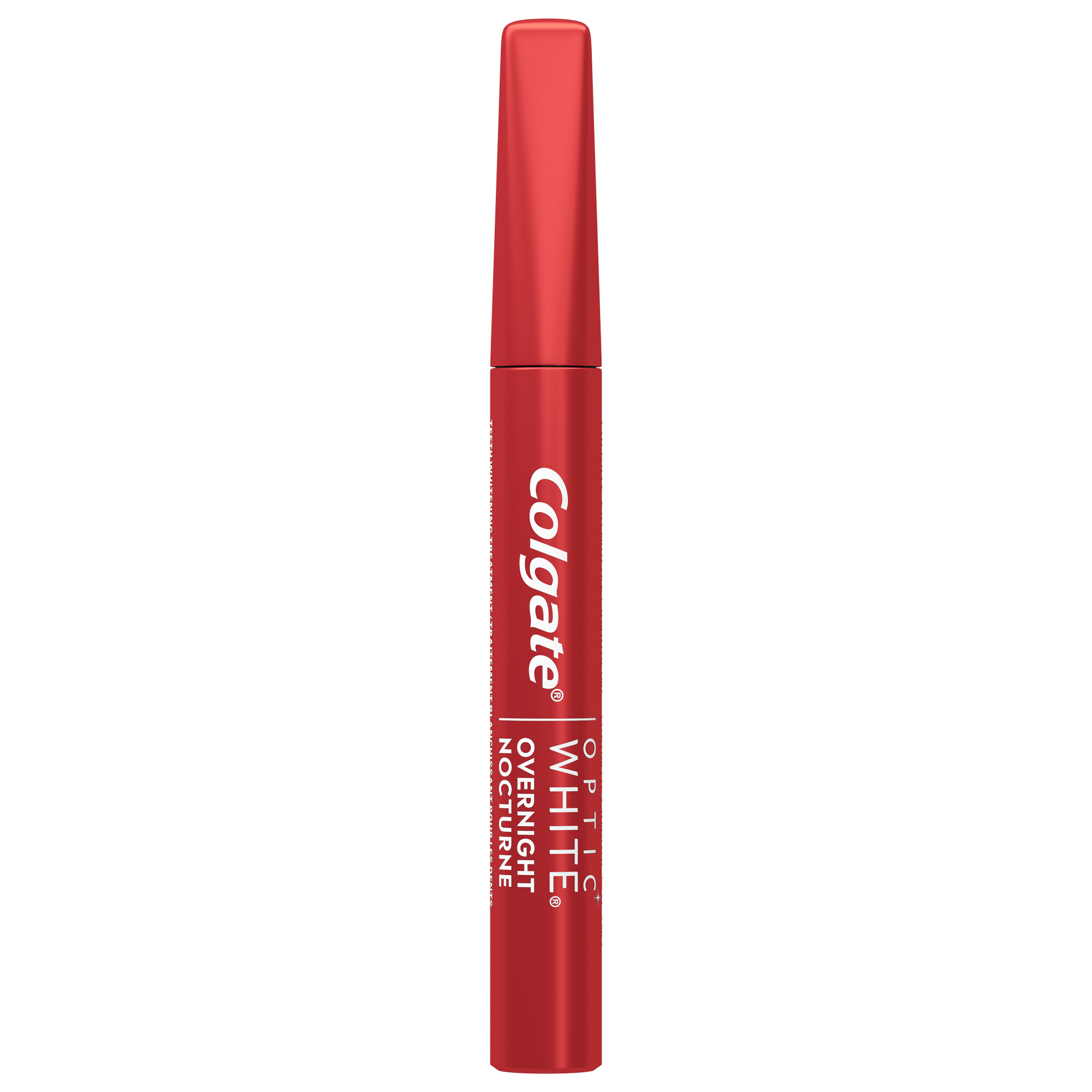
Over-the-counter tooth whitening products you can purchase include toothpaste and products with bleaching agents, such as: whitening strips, gels, rinses, pens, and gel trays.
Typically, whitening toothpaste contains little or no bleaching agents but helps brighten your teeth by scrubbing away stains. These kinds of toothpaste are less likely to irritate or burn the gums if they have no hydrogen peroxide. You might experience some irritation if you brush too hard, but the ingredients themselves are unlikely to cause a problem.
Usually, tooth whitening products with bleaching agents contain either hydrogen peroxide or carbamide peroxide. According to the Ontario Hygienists' Association, whitening may temporarily increase tooth sensitivity and irritate the gums.
Besides feeling a chemical burn, you'll recognize gum irritation during the whitening process if your gums develop white spots or parts of your gum turn white. Your gums might become inflamed, as well.
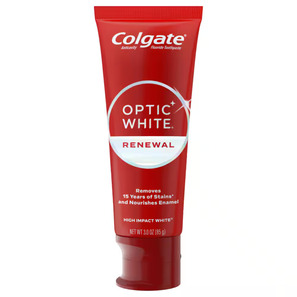
Renewal Teeth Whitening Toothpaste, Brilliant Shine
Use this whitening toothpaste to nourish your enamel and deeply whiten teeth. Colgate® Optic White® Renewal Brilliant Shine Toothpaste is a gluten free, sugar free, and vegan toothpaste.
Let's say you're in the middle of a whitening treatment at home, and you feel a slight burning in your gums. What can you do?
First, stop the treatment: Remove the tray or the whitening product. Don't wait until the burning gets worse!
Then, rinse your mouth: Rinsing with warm saltwater swishes away any lingering bleaching product and soothes the irritation.
As long as you stop the bleaching treatment quickly, the good news is that gum irritation usually resolves on its own after a few days. Saltwater rinses will help relieve discomfort during recovery. If needed, over-the-counter pain relievers can dull the irritation or burning feeling.
If your burns seem severe, become inflamed, or cause you concern in any way, it's a good idea to visit your dentist's office. By looking at the injury, your dental professional can tell you if home care will be enough to treat the injury or if there are other options to relieve your injured gums.
Teeth whitening is generally safe as long as you take a few precautions. Remember to:
You might also think about using non-peroxide whitening products on the market. Some are marketed as containing only natural ingredients. These products might have their own side effects, including gum irritation, so read the ingredients and directions with care.
Though consumer teeth whiteners contain much lower bleaching agent concentrations than products used in your dentist's office, you might consider professional tooth whitening. In a dental office, you're in a controlled setting with dental professionals taking every precaution to protect your teeth and gums. And they can monitor any irritation situation.
If you have no time for professional teeth whitening, at least ask your dentist for a custom-fitted gel tray to use at home. Also, ask your dental professional to demonstrate how to apply whitening gel into the tray properly.
We all want a dazzling white smile. But in getting that brilliant smile, you don't want your gums to turn white (or red) from bleaching agents. Make sure you recognize when your gums are irritated or burning so you can take steps to soothe your gingival tissue. Next time you whiten your teeth, take preventive measures so when you smile, your teeth dazzle, and your gums look pink and healthy.
ORAL HEALTH QUIZ
Take our Oral Health assessment to get the most from your oral care routine
ORAL HEALTH QUIZ
Take our Oral Health assessment to get the most from your oral care routine