Chalky Teeth: Causes and How to Deal
July 26, 2023.
4
min read


"Chalky teeth" is a catchall term used to describe abnormalities with the appearance of the enamel. For instance, if the enamel has an abnormal color, either being whiter than usual or having shades of cream, brown, or yellow. Sometimes the enamel crumbles easily and appears dull, unlike the shiny and smooth appearance of regular enamel. You may also see pits and grooves on your enamel from some angles. If you notice discoloration, it may be a small spot or patch or affect the entire tooth. Chalky teeth are more likely to occur in children. According to the D3 Group, 1 in 5 children have chalky teeth, and kids who have chalky teeth face a 10x higher risk of tooth decay. Chalky molars are the most common type of chalky teeth and are also called molar hypomineralisation. It should also be noted that the 6-year molars (otherwise known as the first permanent molars to erupt) are the most likely to be chalky.
Now that we know what chalky teeth are, it's time to distinguish between having chalky teeth and having a chalky feeling in the mouth. Certain foods like spinach or strawberries are high in oxalic acid, and when this acid combines with the calcium in your body, it might leave you with a chalky feeling in the mouth. This feeling is usually temporary and goes away if you rinse your mouth with water or a mouthwash.
According to the Journal of the American Dental Association (JADA), causes of chalky teeth are unknown, despite more than 30 investigations having been done at the population level. That said, in the case of chalky 6-year molars, most findings implicate systemic illness or its treatment during infancy. Although the causes of chalky teeth are still unclear, the good news is that they can and should be treated.
JADA cautions that chalky teeth often go misdiagnosed or unnoticed – some see it as caries, while others misname it. The right diagnosis is critical to ensure that your child gets the right treatment.
The way that a pediatric dentist might treat your child depends on how badly your child's teeth are affected. In mild cases, if your child is complaining of toothache or if there's an increased risk for dental caries, the D3 Group recommends using a desensitizing agent, a dental hardening product, or a fissure sealant. For moderate cases, where this is some breakdown of the tooth, your child's dentist might do a dental filling. That, combined with ongoing care at home, can manage the problem. If your child's chalky teeth are severe, the dentist might try installing a crown made of a base alloy (such as stainless steel) to save the tooth. If the tooth is too damaged to be saved, it may need to be extracted.
If you're experiencing chalky teeth as an adult, you must consult with your dentist as soon as possible to find out how to treat them.
A gritty, chalky feeling in your mouth isn't pleasant. Luckily, in most cases, rinsing your mouth can get rid of it. If your child is experiencing chalky teeth, you must check with a pediatric dentist. Untreated chalky teeth can result in cavities and tooth decay which can be easily be avoided with the right treatment!
Oral Care Center articles are reviewed by an oral health medical professional. This information is for educational purposes only. This content is not intended to be a substitute for professional medical advice, diagnosis or treatment. Always seek the advice of your dentist, physician or other qualified healthcare provider.
ORAL HEALTH QUIZ
Take our Oral Health assessment to get the most from your oral care routine
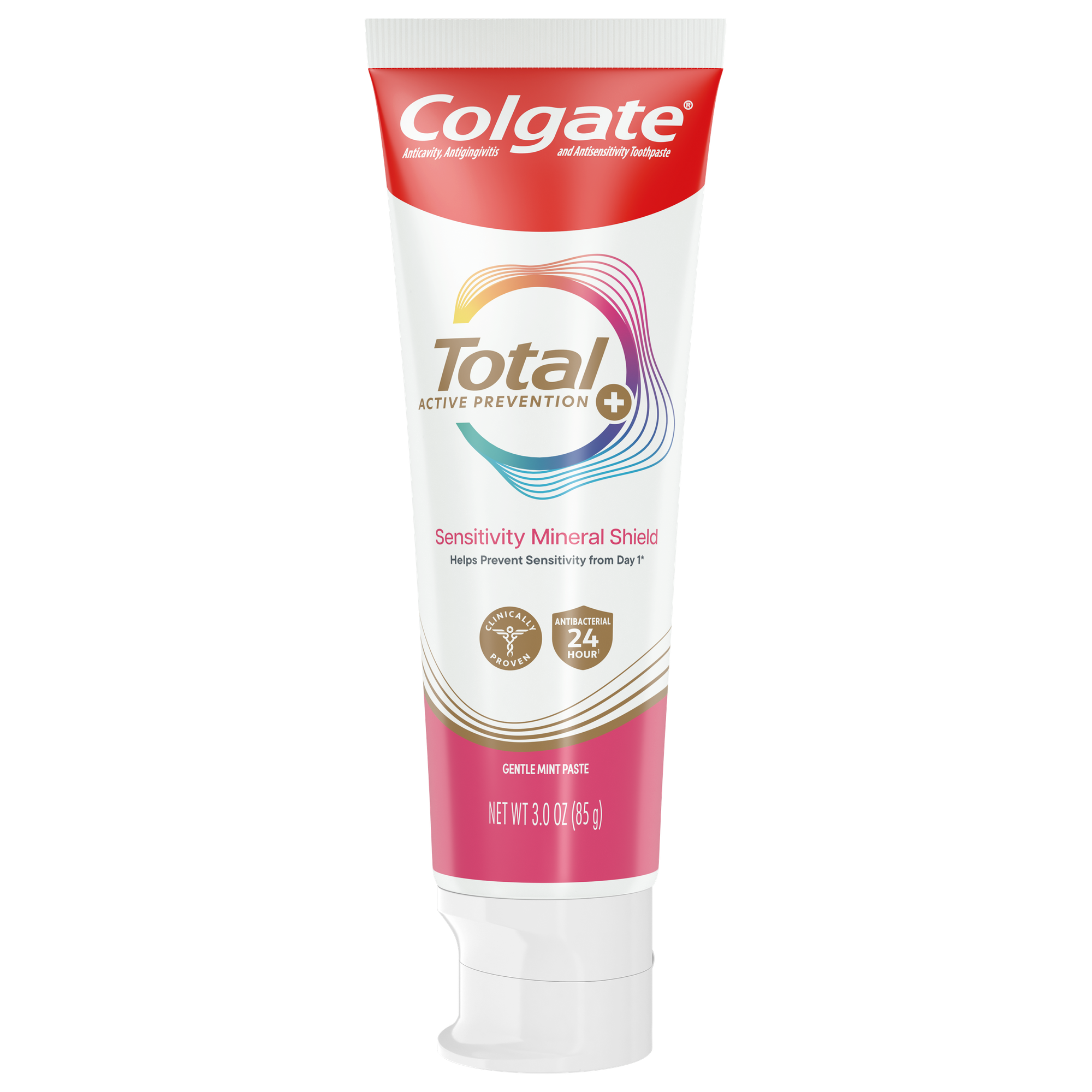
Help prevent sensitivity from day 1* with Colgate Total Active Prevention Sensitivity Mineral Shield Mint Toothpaste.
*with twice daily use
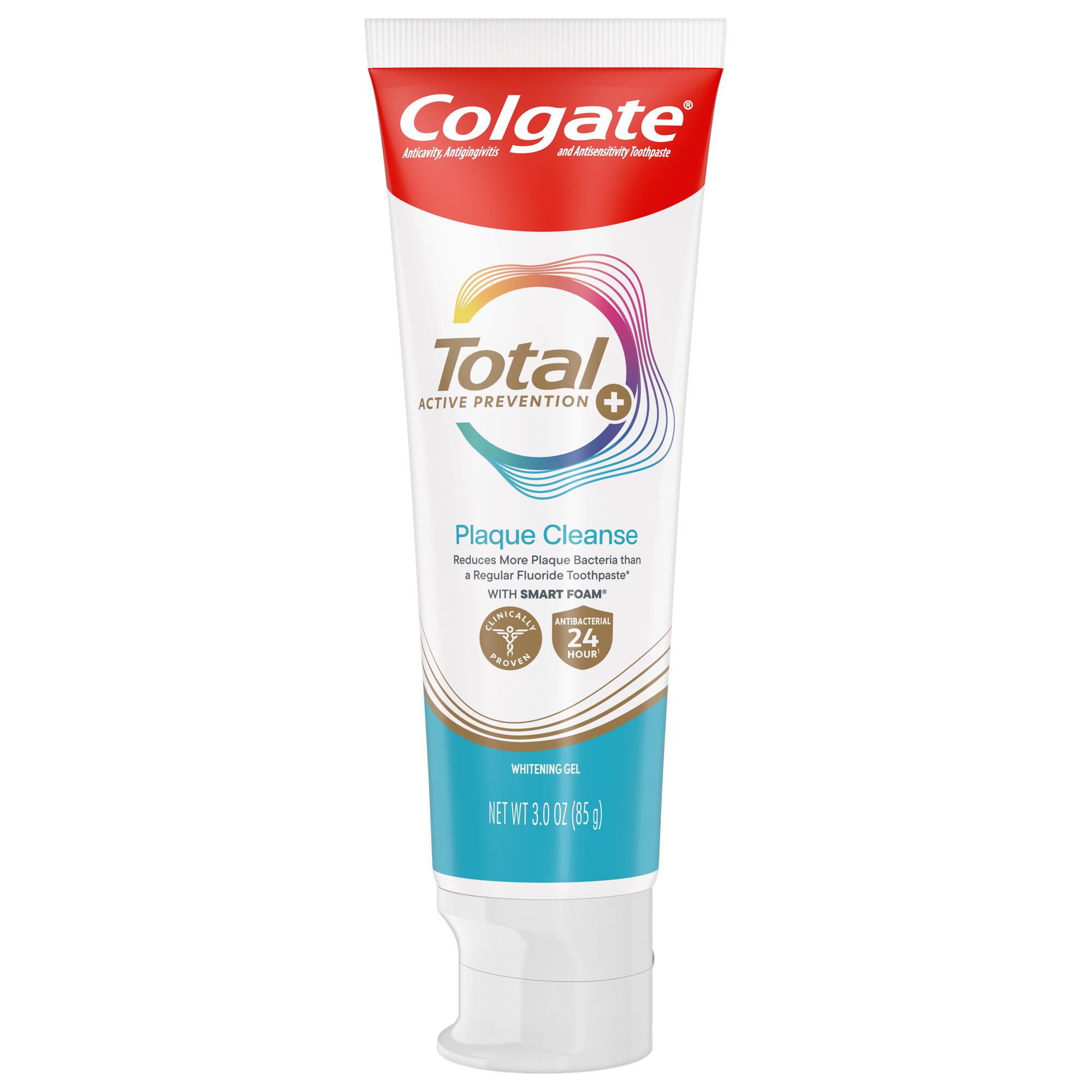
Help promote healthy gums using Colgate Total Active Prevention Plaque Cleanse Whitening Toothpaste Gel. This patented tartar prevention toothpaste fights the root cause* of gingivitis, plaque, tartar, cavities, sensitivity, bad breath, weak enamel, and stains and is 2x more effective*** at fighting bacteria, the root cause of oral health problems like cavities and gingivitis.
*via protection against bacteria and dietary exposures, with daily brushing
***via reduction of bacteria vs. non-antibacterial fluoride toothpaste with 2x daily brushing and 4 weeks use
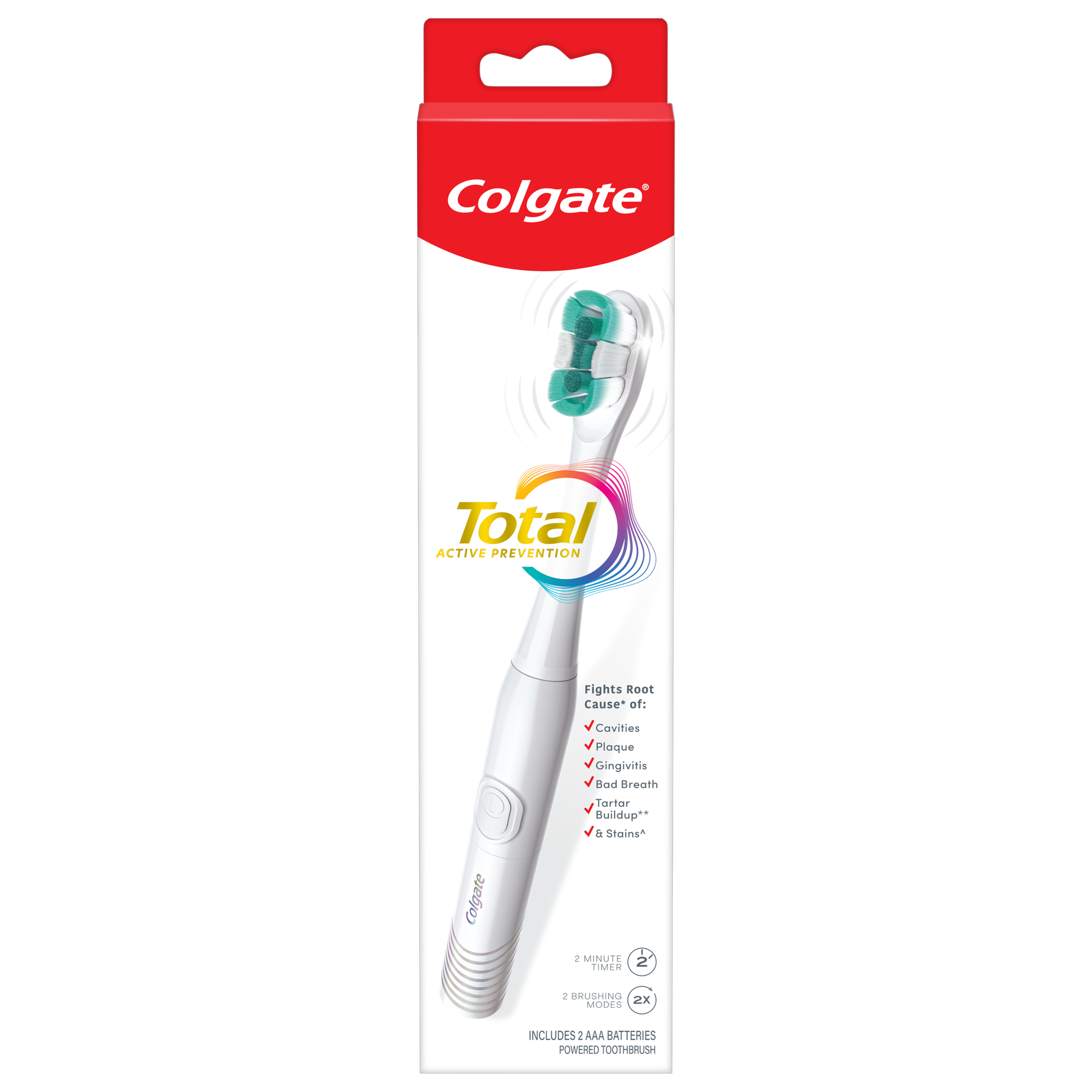
Colgate Total Active Prevention Battery Powered Electric Toothbrush, WhitePower away plaque with Colgate Total Battery Powered Toothbrush.
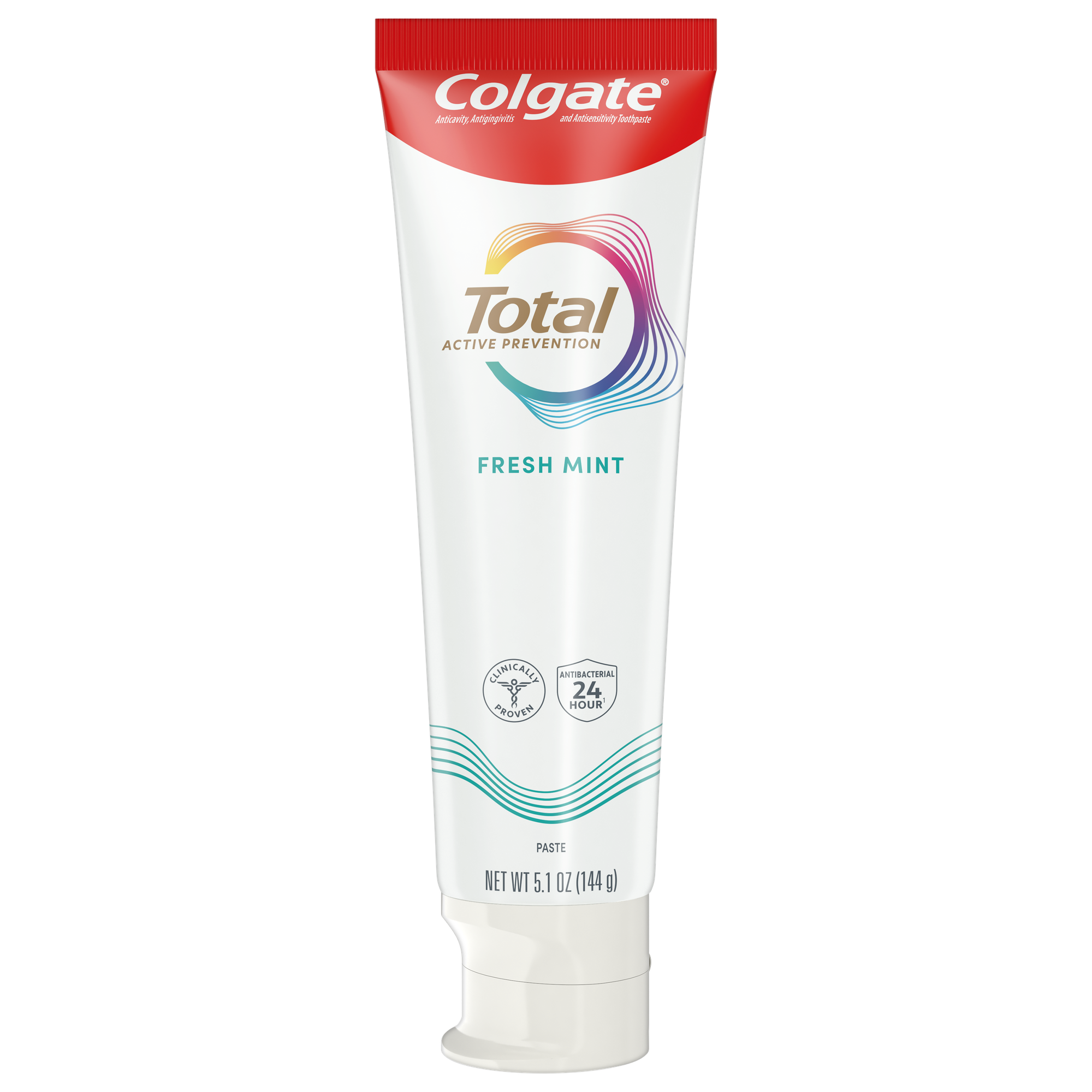
Colgate Total Fresh Mint Toothpaste fights bacteria, the root cause of many oral health issues such as gingivitis, tartar, sensitivity, weak enamel, bad breath, and cavities.


About Cookies on This Site

