Gum Disease: Symptoms, Stages, and How to Treat It
min read


Key takeaways:
What it is: an inflammatory condition starting as gingivitis (reversible inflammation) that can progress to periodontitis, where chronic inflammation destroys the bone and ligaments supporting the teeth.
The primary cause: dental plaque/biofilm that, if not removed, calcifies into calculus (tartar). This porous structure harbors aggressive bacteria and can only be removed through professional scaling.
Systemic connection: oral bacteria and inflammation can enter the bloodstream, increasing the risk of heart disease and stroke, and creating a dangerous two-way relationship with diabetes.
Treatment and prevention: while gingivitis can be reversed by removing calculus with a professional dental cleaning and practicing the "foundational triad" of brushing, flossing, and rinsing at home, advanced periodontitis may require additional clinical treatment like scaling and root planing.
Gum disease is an inflammatory condition triggered by a build-up of plaque biofilm. It begins as gingivitis and can evolve into chronic periodontitis if left untreated. When the bacterial colonies within the biofilm are left undisturbed, they release toxins that provoke a persistent immune response. This chronic inflammation eventually leads to the destruction of the periodontal ligament and alveolar bone, which are essential for supporting the teeth.
Research from organizations like the FDI World Dental Federation, that represents dentists worldwide, confirms that severe periodontitis is a leading cause of tooth loss globally. Keeping your gums healthy is essential not just for your smile, but for your overall well-being.
Gum disease often begins without pain, making it difficult to detect without a professional exam in the earliest stages.
You should monitor your mouth for these specific signs:
Gingival erythema: gums that appear bright red, dusky purple, or swollen.
Bleeding when brushing: gums that bleed during routine brushing or flossing.
Halitosis: persistent bad breath caused by volatile sulfur compounds (VSCs) produced by bacteria.
Recession: teeth that look "longer" because the gum tissue and bone ( periodontium) is pulling away.
Tooth mobility: teeth that feel loose or shift when you bite down.
The primary cause of gum disease is a build-up of plaque, a sticky film of bacteria that constantly forms on your teeth.
When you do not remove plaque through daily brushing and flossing, it hardens into calculus (tartar). Because tartar is a porous mineral structure, it acts as a reservoir for aggressive anaerobic bacteria, making professional intervention (scaling) the only way to arrest the infection.
Several factors can increase your risk of gum disease:
Tobacco use and smoking.
Hormonal changes in women, such as during pregnancy.
Chronic illnesses like diabetes or HIV.
Medications that reduce saliva flow.
Poor nutrition, specifically vitamin C deficiency.
Gum disease progresses through two main phases:
Gingivitis: the mildest stage. Your gums may be red or swollen and bleed easily. At this stage, there is usually no permanent bone loss, and the condition is often reversible with professional care and improved home hygiene.
Periodontitis: if you don't treat gingivitis, it could develop into periodontitis. Bacteria migrate into the subgingival space, creating deep "pockets." The body’s inflammatory response to these invaders inadvertently breaks down the connective tissues and bone, leading to gingival recession and eventual tooth mobility.
Gum disease is not directly contagious like a flu, but the bacteria that cause gum disease can be exchanged through saliva when kissing.
While the bacteria are transmissible, whether you develop the disease depends on your individual immune response to the bacteria and your daily oral hygiene habits.
If you have healthy habits and a strong immune system, your mouth can often fight off these harmful invaders. To protect yourself, avoid sharing toothbrushes and maintain a rigorous cleaning schedule.

The goal of treatment is biofilm disruption and the reattachment of the gums to the tooth. Since the necessary treatment is determined by the staging and grading of the disease, professional consultation is essential.
Treatment options include:
Scaling and root planing: a "deep clean" that removes tartar from below the gum line and smooths root surfaces to prevent bacteria from re-adhering.
Antimicrobial therapy: this may involve daily use of a mouth rinse containing cetylpyridinium chloride (CPC) or a prescription mouth rinse like chlorhexidine to chemically neutralize bacteria.
Surgical intervention: a specialist may recommend surgery to restore lost tissue or bone in advanced cases.
Here is how to maintain disciplined prevention and avoid gum inflammation:
Brush your teeth for two minutes at least twice a day.
Use a soft-bristled toothbrush to avoid irritating the gum line.
Floss daily to remove food particles and plaque from between teeth.
Rinse with an antiseptic mouthwash to reduce bacteria.
Visit your dentist at least every six months.
Limit sugary snacks and acidic drinks that feed harmful bacteria.
Drink plenty of water to maintain healthy saliva flow.
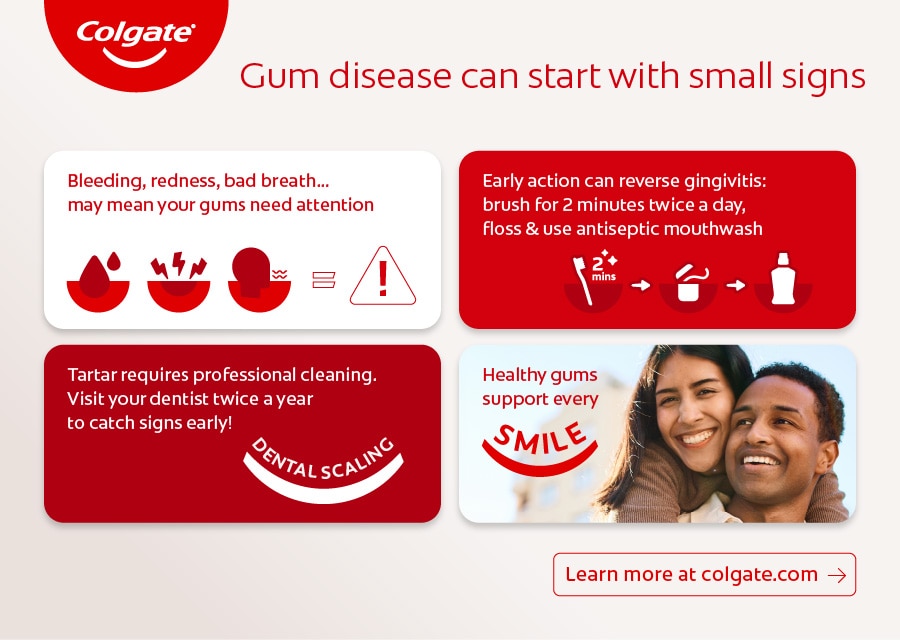
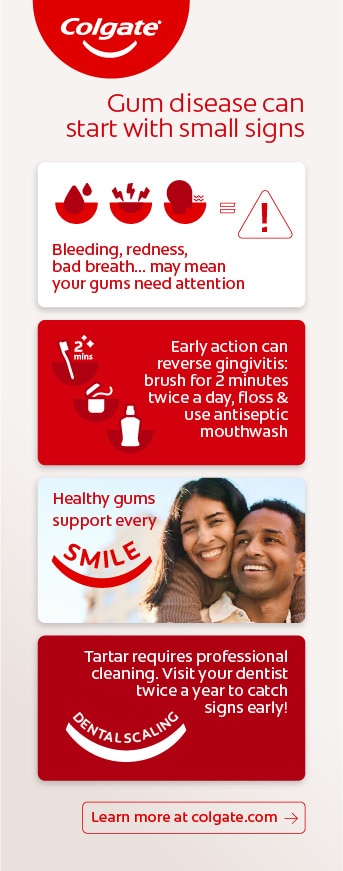
The progression of gum disease does not just affect your mouth; it is closely linked to your overall systemic health. Because the mouth is the gateway to the rest of the body, oral bacteria and inflammation can influence various health conditions.
There is a significant association between periodontal disease and cardiovascular health. Bacteria from infected gums can enter the bloodstream and contribute to the inflammation of blood vessels, which increases the risk of heart disease and stroke.
Diabetes and gum disease have a two-way relationship where one affects the severity of the other. High blood sugar levels can weaken your body's ability to fight infections, making gum disease more severe, while active gum infection can make it harder to stabilize blood glucose.
You can reverse gingivitis, the earliest stage, by improving your brushing and flossing habits. However, periodontitis requires professional dental intervention to stop the loss of bone and tissue.
Treatment usually begins with the removal of calculus (tartar), progressing to a deeper cleaning procedure called scaling and root planing. If the infection is severe, treatments may include antibiotics or surgical procedures to repair damaged gums and bone.
Gums recede when the tissue pulls away from the tooth, often due to physical trauma from hard brushing or as a symptom of periodontal disease. Once the tissue is lost, it does not grow back naturally, making prevention vital.
This article is intended to promote understanding of and knowledge about general oral health topics. It is not intended to be a substitute for professional advice, diagnosis or treatment. Always seek the advice of your dentist or other qualified healthcare provider with any questions you may have regarding a medical condition or treatment.
ORAL HEALTH QUIZ
Take our Oral Health assessment to get the most from your oral care routine
ORAL HEALTH QUIZ
Take our Oral Health assessment to get the most from your oral care routine