Bleeding gums treatment: how to restore health
3
min read

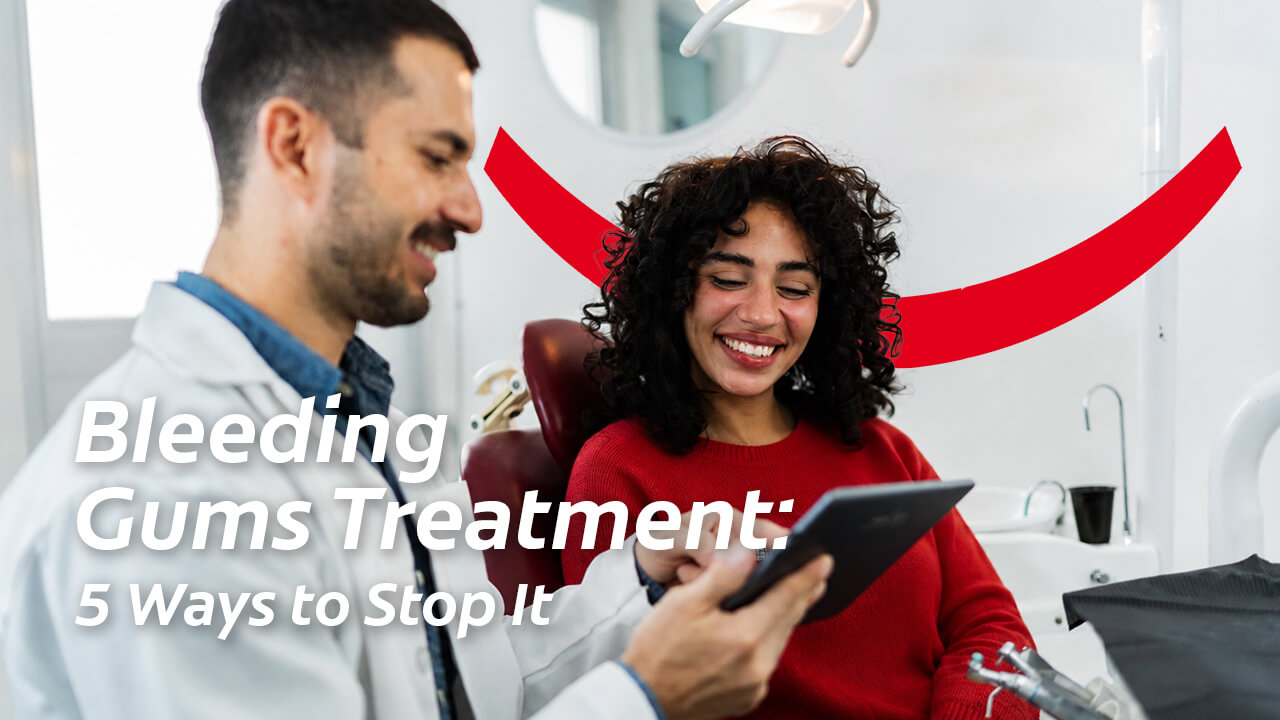
The process usually begins with a professional dental exam. This will involve visually examining the teeth to check for plaque and tartar(calculus), and probing the space between the gums and teeth to measure the depth of any gum pockets; deeper pockets suggest that gum disease. is present.
Because you cannot remove hardened tartar at home, a dental professional must perform a professional cleaning. If advanced gum infection is present below the gum line, a procedure called scaling and root planing can be used to clean the gum pockets.
These measures are generally regarded as the most effective for treating bleeding gums. They ensure an accurate diagnosis, guide appropriate actions (such as removing the source of the bacteria) and facilitate the healing of the gum tissue.
For advanced cases of periodontal disease, modern laser technology offers a minimally invasive alternative to traditional surgery. One example, the Laser-Assisted New Attachment Procedure (LANAP), uses a specific light frequency to target and vaporize only the infected tissue without cutting the healthy gum.
The main benefits are less pain, less bleeding, and faster recovery times compared to conventional surgery.
This advanced bleeding gums treatment is an option for those looking to reverse gum disease without the need for scalpels or sutures.
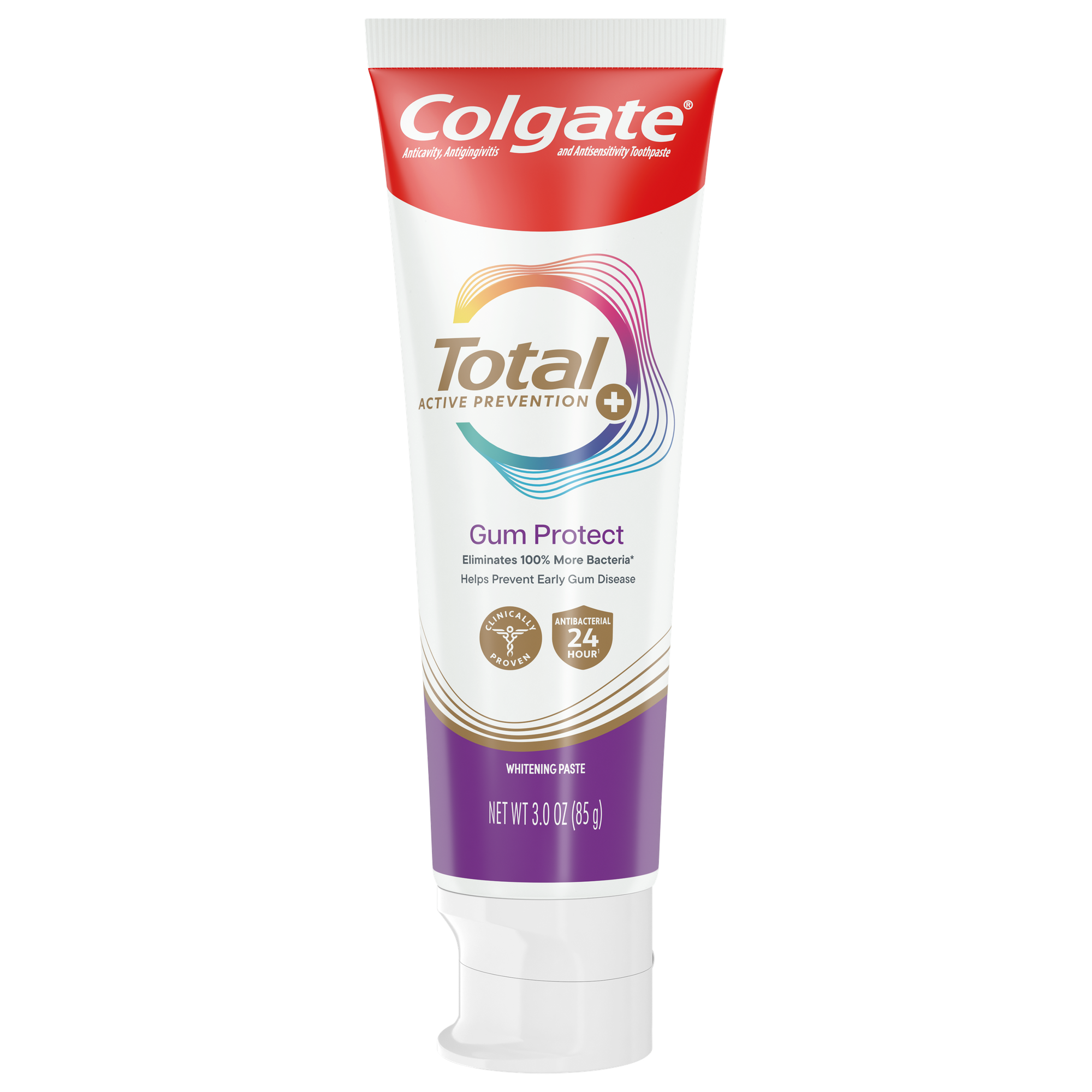
Not all toothpastes are the same when it comes to fighting infection. While sodium fluoride prevents cavities, stannous fluoride provides an additional antimicrobial benefit. It works by neutralizing the plaque bacteria that irritate the gum line and creating a protective shield that lasts for hours.
Choosing the right toothpaste is essential. For example, using the best toothpaste for gingivitis is an effective strategy to help stop bleeding gums, manage sensitivity, and prevent overall gum problems.
While natural methods can support healing, they are not a substitute for professional care:
Salt water rinses may help soothe irritated gums and may reduce swelling by killing surface bacteria.
However, a "natural" approach alone cannot remove tartar. You must always consult with your dentist to ensure a small and reversible problem doesn't turn into advanced periodontitis.
It depends on your local laws and the dentist's assessment. A virtual consultation is a great way to show the dentist any changes to your gums or discuss symptoms, but may not be the best alternative for a concrete diagnosis and treatment plan.
While a dentist may prescribe an antimicrobial mouthwash or antibiotics via teledentistry, they will almost always recommend an in-person visit for a physical cleaning, as medication alone cannot remove the physical plaque buildup.
This article is intended to promote understanding of and knowledge about general oral health topics. It is not intended to be a substitute for professional advice, diagnosis or treatment. Always seek the advice of your dentist or other qualified healthcare provider with any questions you may have regarding a medical condition or treatment.
ORAL HEALTH QUIZ
Take our Oral Health assessment to get the most from your oral care routine
ORAL HEALTH QUIZ
Take our Oral Health assessment to get the most from your oral care routine


About Cookies on This Site