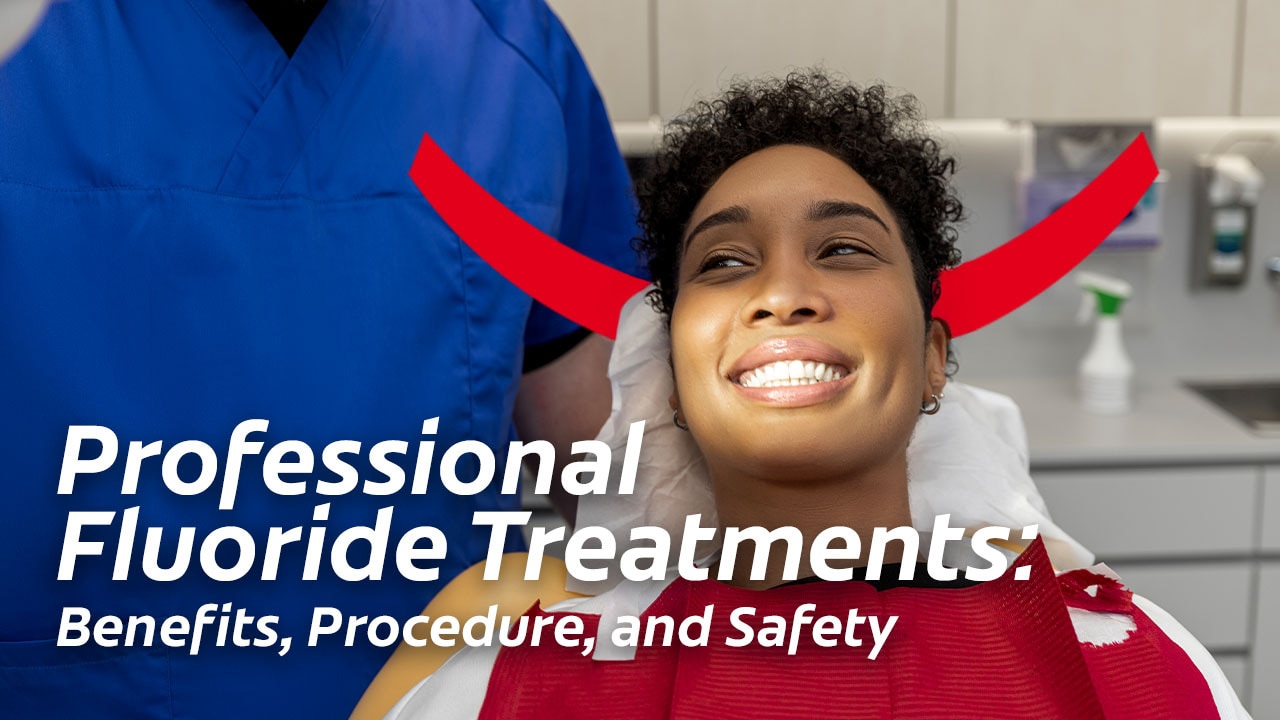
Professional Fluoride Treatments, Benefits and Safety
min read

Key takeaways:
While over-the-counter fluoride products such as fluoride toothpaste provide daily protection, professional fluoride treatments offer a much higher concentration of this essential oral care routine component for intensive prevention. In fact, these two allies of oral health are complementary.
The main benefits of in-office options are:
Other related benefits:
Just as over-the-counter oral care products vary from brand to brand and from store to store, the types of treatments offered at dental offices are also diverse.
The process is straightforward and typically takes only a few minutes during your cleaning:
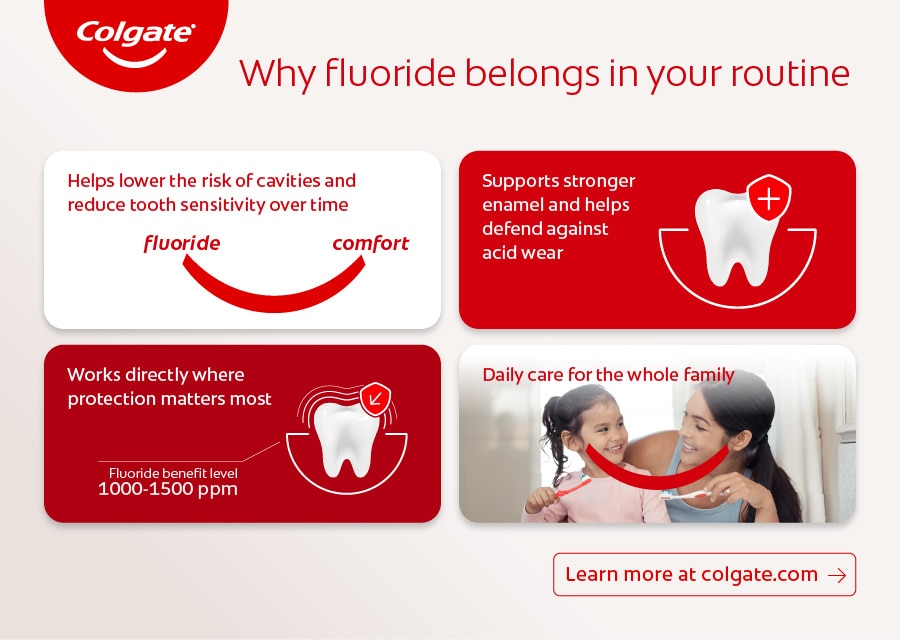
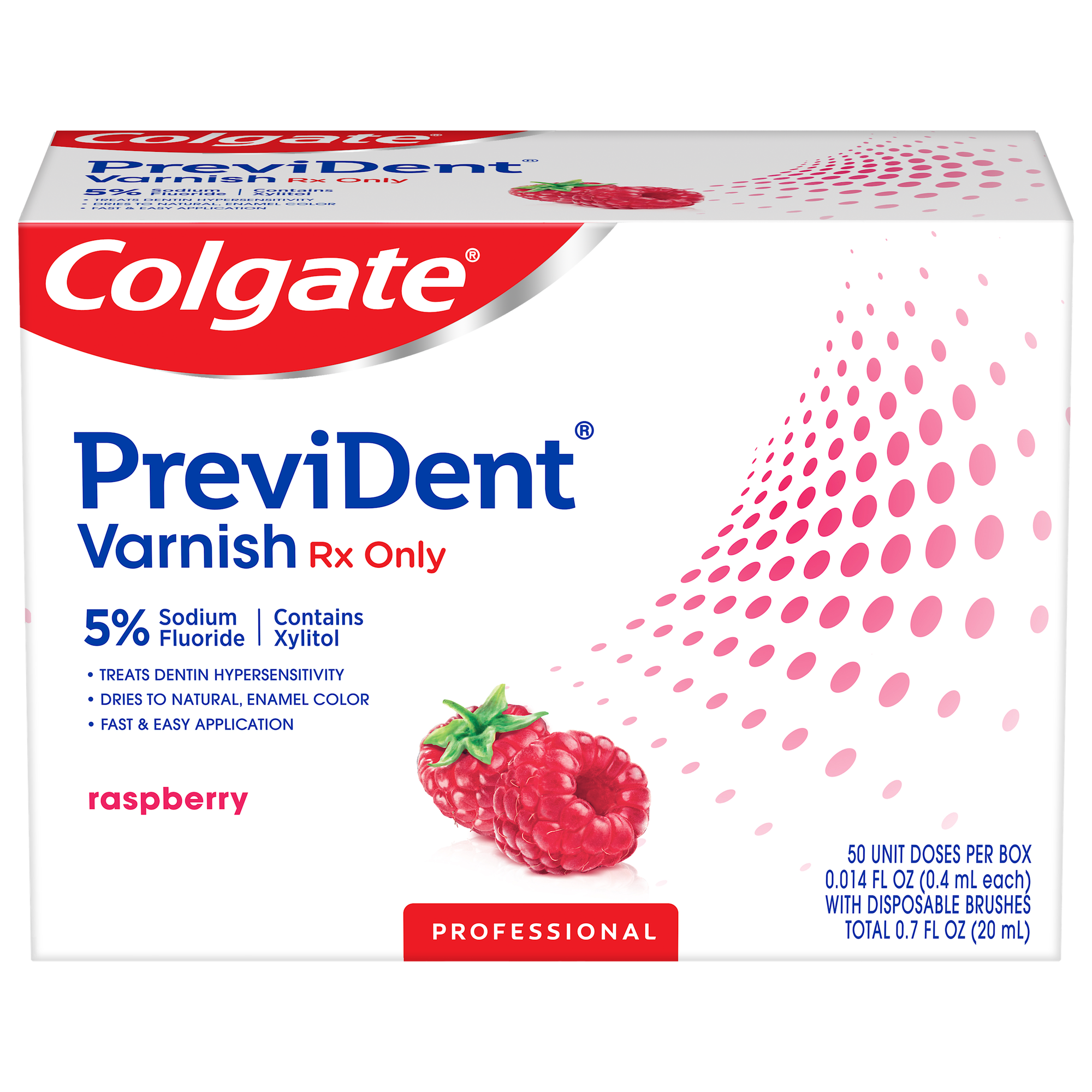
In-office treatments provide a concentrated "reservoir" of fluoride. While daily brushing maintains a baseline level of protection, a professional application (often containing up to 22,600 ppm of fluoride) creates a long-lasting mineral film that slowly releases fluoride into the enamel over several days.
These treatments complement the preventive power of regular products, such as fluoride toothpaste, helping to avoid the onset of cavities and other dental problems in the long term.
Patients with a history of frequent cavities, smokers, or those with receding gums should discuss professional application with their dentist.
While 6–12 months is standard, dentists often recommend varnish every 3–6 months for high-risk patients.
Yes. Fluoride varnish is the preferred method for children because it adheres quickly to the teeth, minimizing the risk of the child swallowing the fluoride.
This article is intended to promote understanding and knowledge about general oral health topics. It is not intended to be a substitute for professional advice, diagnosis or treatment. Always seek the advice of your dentist or other qualified healthcare provider with any questions you may have regarding a medical condition or treatment.
ORAL HEALTH QUIZ
Take our Oral Health assessment to get the most from your oral care routine
ORAL HEALTH QUIZ
Take our Oral Health assessment to get the most from your oral care routine

Discover if whitening toothpaste is right for you: understand its effectiveness and safety to choose the best product for your dental health.

Looking for a way to brighten your smile with teeth whitening? Learn more about both UV and blue light teeth whitening to decide which is the best option for you.

By: Mandy Dennis
Registered Dental Hygienist

A brighter smile can boost your confidence, consider a professional enamel microabrasion. Click here to learn more about enamel microabrasion with Colgate®.