When to See an Endodontist vs. Periodontist
4
min read


A general dentist can, in some cases, perform root canals and treat gum disease with deep cleanings. But if severe problems arise in your root, your dentist may refer you to an endodontist. This is a dental professional who specializes in treating your tooth's root, pulp and any related pain, as the American Association of Endodontists (AAE) explains.
It takes several years of training to become an endodontist. First, an aspiring endodontist would typically gain a bachelor's degree in a related field, such as biology or chemistry, to prepare for dental school. The American Dental Association (ADA) notes that students must successfully complete the Dental Admissions Test (DAT) to apply for admission to a four-year accredited dental school. Upon completing dental school, endodontists train an additional two or more years in an accredited endodontics program. The last step, if they want to become a board-certified specialist, is certification with the American Board of Endodontics.
According to the AAE, endodontists represent less than 3% of dentists. They work to maintain your tooth's integrity and are highly skilled at performing surgery and procedures on the root and pulp of your teeth. In fact, the AAE reports that general dentists refer almost half of their root canal cases to endodontists. Your general dentist would likely refer you to one if you've experienced trauma to your face or mouth, or if you have severe swelling around your teeth. They'd also likely refer you to an endodontist for endodontic surgery. One of the more common referrals is for an apicoectomy, which is a surgery to remove the tip of your root and any acutely inflamed tissue to help prevent further infection, explains the AAE.
What is an endodontist vs. periodontist? Like an endodontist, a periodontist is a dentist who has the same skills and credentials as a general dentist but has also gained education and certification in treating, diagnosing and managing periodontal disease, as the American Academy of Periodontology (AAP) states. These experts complete an additional three years of training beyond dental school to become certified in an array of gum treatments. The AAP explains that periodontists are akin to the plastic surgeons of dentistry. They place implants, perform laser treatments, lengthen crowns and even perform regenerative procedures.
Maintaining healthy gums is vital to dental health, as they protect your tooth root from loosening or being exposed. Ideally, your gums should be a healthy pink color and fit evenly around your teeth. If your general dentist diagnoses you with advanced gum disease, a periodontist can perform pocket reduction procedures (gum surgery) to reduce pocketing and remove bacteria below the gumline that might cause infection, bone loss or tooth loss, as the AAP notes.
In many cases, issues with your roots and gums are preventable. Maintaining great oral hygiene at home can help you keep your mouth free of decay-causing bacteria and prevent early-stage gum disease. Remember to brush twice a day with a fluoride toothpaste, floss daily and see your dentist at least twice a year.
If you have pain in your mouth, or if you notice your gums are swollen, make an appointment with your dentist — sooner rather than later — so that they can refer you to the correct dental specialist, if needed.
Oral Care Center articles are reviewed by an oral health medical professional. This information is for educational purposes only. This content is not intended to be a substitute for professional medical advice, diagnosis or treatment. Always seek the advice of your dentist, physician or other qualified healthcare provider.
ORAL HEALTH QUIZ
Take our Oral Health assessment to get the most from your oral care routine

At each appointment, asking dental questions is an important part of your long-term healthcare. Here are 10 you should get the answers to.

With some types of dental work, your dentist might recommend a type of anesthetic like deep sedation. Learn all about deep sedation and what it's used for.

How often should you go to the dentist after a first appointment? Six months? A year? Ideally, you should take your child to the dentist every six months.

Learn more about oral care for adults, including how to properly brush and floss, adult toothbrushes, and much more, from the Colgate Oral Care Center.

Help prevent sensitivity from day 1* with Colgate Total Active Prevention Sensitivity Mineral Shield Mint Toothpaste.
*with twice daily use

Help promote healthy gums using Colgate Total Active Prevention Plaque Cleanse Whitening Toothpaste Gel. This patented tartar prevention toothpaste fights the root cause* of gingivitis, plaque, tartar, cavities, sensitivity, bad breath, weak enamel, and stains and is 2x more effective*** at fighting bacteria, the root cause of oral health problems like cavities and gingivitis.
*via protection against bacteria and dietary exposures, with daily brushing
***via reduction of bacteria vs. non-antibacterial fluoride toothpaste with 2x daily brushing and 4 weeks use
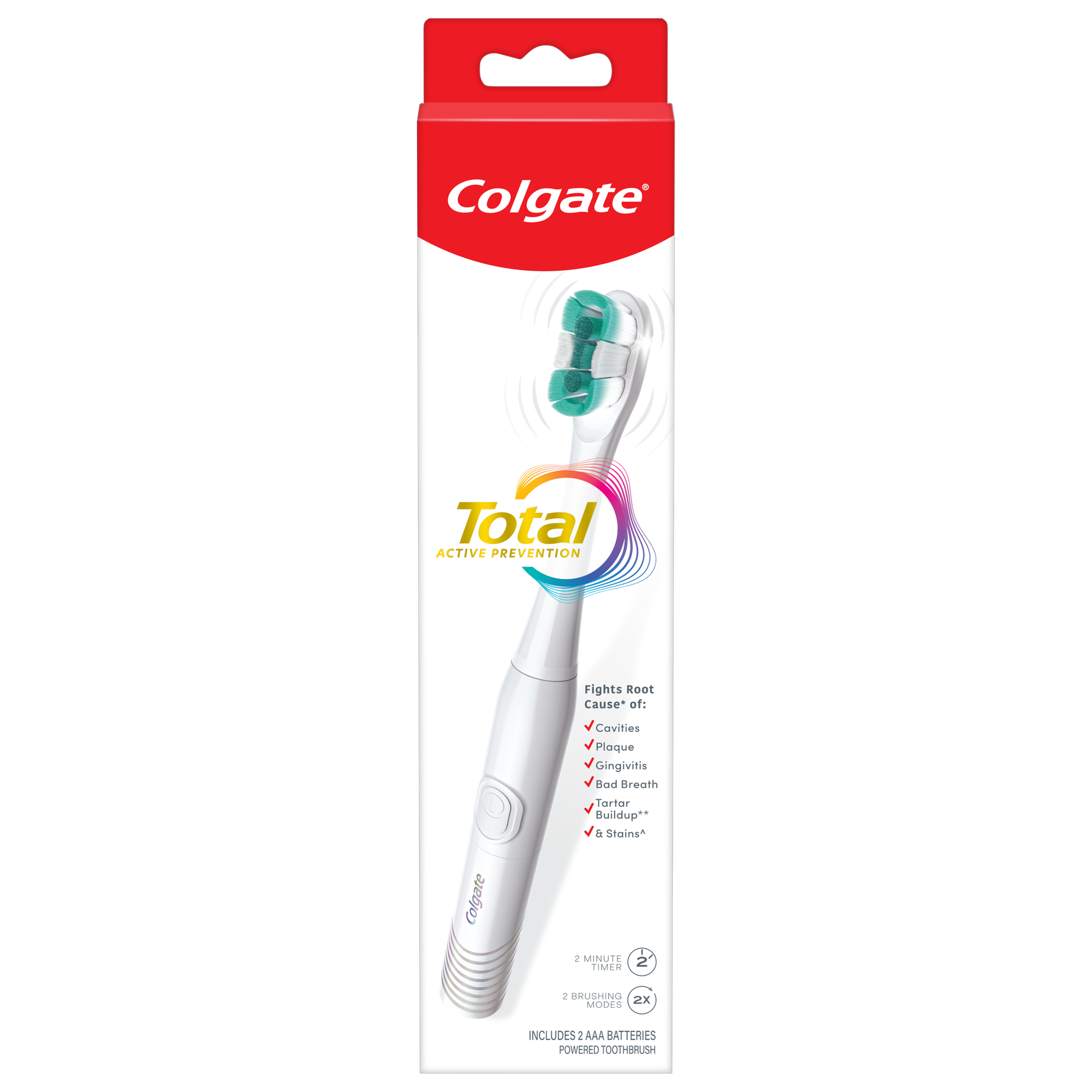
Colgate Total Active Prevention Battery Powered Electric Toothbrush, WhitePower away plaque with Colgate Total Battery Powered Toothbrush.

Colgate Total Fresh Mint Toothpaste fights bacteria, the root cause of many oral health issues such as gingivitis, tartar, sensitivity, weak enamel, bad breath, and cavities.


About Cookies on This Site

