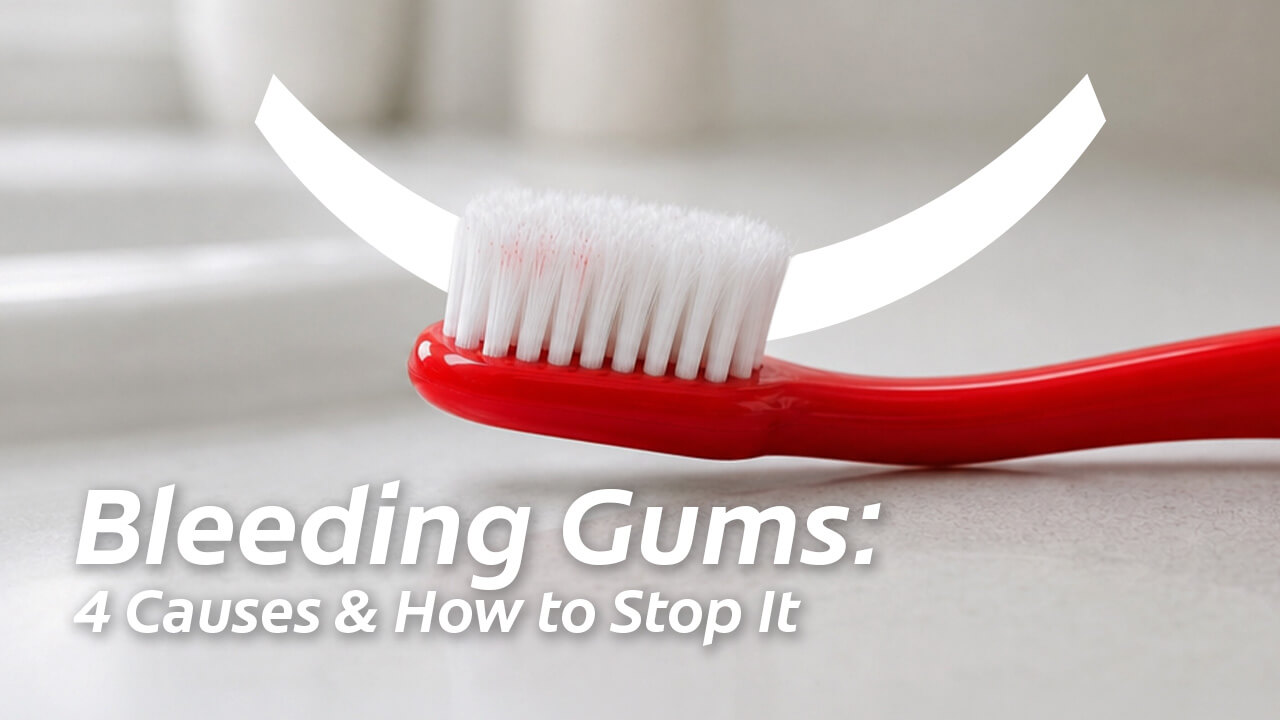
Bleeding gums when brushing: causes and how to stop it
min read

Key takeaways:
The root cause: gums bleed because plaque toxins trigger an immune response that increases blood flow to the tissue, making the oral mucosa fragile and prone to bleeding upon contact.
Brushing technique: you should never stop brushing a bleeding area. Instead, switch to a soft-bristled brush and use gentle circular motions to remove the plaque that is causing the infection.
The "red flag": while minor spotting can happen with incorrect/hard brushing, frequent bleeding is a clinical sign of gingivitis. If ignored, this can lead to the destruction of periodontal ligaments and bone, and may eventually cause tooth loss.
Healing timeline: with consistent, gentle brushing and flossing, early-stage gingival inflammation and bleeding should typically resolve within 7 to 14 days.
When plaque is not removed, it irritates the gum line, making the tissues swell and bleed easily upon contact. Bacteria in the plaque biofilm release metabolic toxins that trigger a localized immune response. This results in vasodilation (increased blood flow to the area), making the oral mucosa fragile and prone to bleeding upon the slightest contact.
If you find that your gums keep bleeding when you brush your teeth, the most common culprit is gum disease. Other causes include:
Brushing too hard.
Using a toothbrush with firm bristles.
Starting a new flossing routine.
Clinical data from the American Dental Association (ADA), a global authority in oral health, suggests that consistent, gentle cleaning usually resolves minor bleeding within two weeks.
But if you are unsure about the real meaning of red gums or notice any other changes, be sure to consult your dentist.
A small amount of pink-tinged saliva is common if you have early gingivitis, but heavy or persistent bleeding is not normal.
If you are wondering how much blood is too much when brushing teeth, consider the frequency and duration. If your gums bleed every time you brush for more than a few days, or if the bleeding does not stop shortly after you finish, it is time to see a dentist.
Significant bleeding often points to advanced periodontal disease or other underlying health issues that require professional diagnosis.
No, you should not stop brushing the area.Avoiding the site allows more plaque to accumulate and allows the bacterial colony to undergo calcification into tartar (calculus), which acts as a permanent irritant that only a professional can remove.The answer is to continue cleaning, but with a gentler touch. Utilize a soft-bristled toothbrush and gentle circular motions to debride the area without causing further mechanical trauma.
Consistent bleeding is a physiological "red flag" indicating that the supporting structures of your mouth may be at risk. Ignoring bleeding gums when brushing teeth can lead to the destruction of the ligaments that hold the teeth in place. When gums are chronically inflamed, they begin to pull away from the teeth, creating pockets where even more bacteria hide. The attachment fibers begin to break down, leading to gingival recession and the formation of deep pockets that harbor aggressive anaerobic bacteria. This progression is the primary path toward bone and tooth loss.
Professional cleanings are the most effective way to remove the hardened plaque (tartar) that keeps your gums in a state of irritation.

Yes, a lack of vitamin C or vitamin K can lead to gum sensitivity and bleeding. However, most cases are related to plaque-induced inflammation and poor oral hygiene.
With proper brushing and flossing, early-stage bleeding usually stops within 7 to 14 days. If the bleeding persists beyond this window, consult your dental professional.
It is common for gums to bleed when you first start flossing or if you haven't flossed in a while. As the tissue becomes healthier and less inflamed, the bleeding should stop.
This article is intended to promote understanding of and knowledge about general oral health topics. It is not intended to be a substitute for professional advice, diagnosis or treatment. Always seek the advice of your dentist or other qualified healthcare provider with any questions you may have regarding a medical condition or treatment.
ORAL HEALTH QUIZ
Take our Oral Health assessment to get the most from your oral care routine
ORAL HEALTH QUIZ
Take our Oral Health assessment to get the most from your oral care routine