How Fluoride Prevents Cavities and Protects Teeth
min read

Regular use of fluoride toothpaste and fluoridated water is associated with a reduced risk of cavities across all age groups, as recommended by dental professionals.
Key takeaways:
Cavities start when bacteria on teeth produce acid that dissolves enamel minerals. When you eat sugar or starch, bacteria such as Streptococcus mutans convert it into acid. This lowers the pH in dental plaque, leading to demineralization—a gradual loss of calcium and phosphate from the enamel.
Because this process repeats daily, teeth need a defense system that restores what acid removes.
Interesting facts about the causes of cavities:
Fluoride interrupts the decay cycle by enhancing remineralization and slowing acid attack.
When fluoride is present in saliva or on tooth surfaces, it enters the enamel crystal structure. As a result, lost minerals return faster, and future acid attacks become less damaging.
That’s why fluoride toothpaste is considered a powerful ally for your oral health.
Interesting facts about the mechanism of fluoride:
Fluoride helps rebuild the tooth surface by attracting calcium and phosphate back into weakened enamel.
According to dental studies, this is how fluoride strengthens enamel through remineralization, and it can reverse very early decay before a cavity forms.
When used as directed, fluoride creates a thin, protective layer that keeps teeth harder and smoother.
Interesting facts about fluoride and enamel repair:
Fluoride reduces the acid output of cavity-causing bacteria by interfering with bacterial enzymes, limiting their ability to metabolize sugars. Therefore, bacteria produce less acid, and enamel experiences fewer acid attacks.
Interesting facts about fluoride and bacteria control:
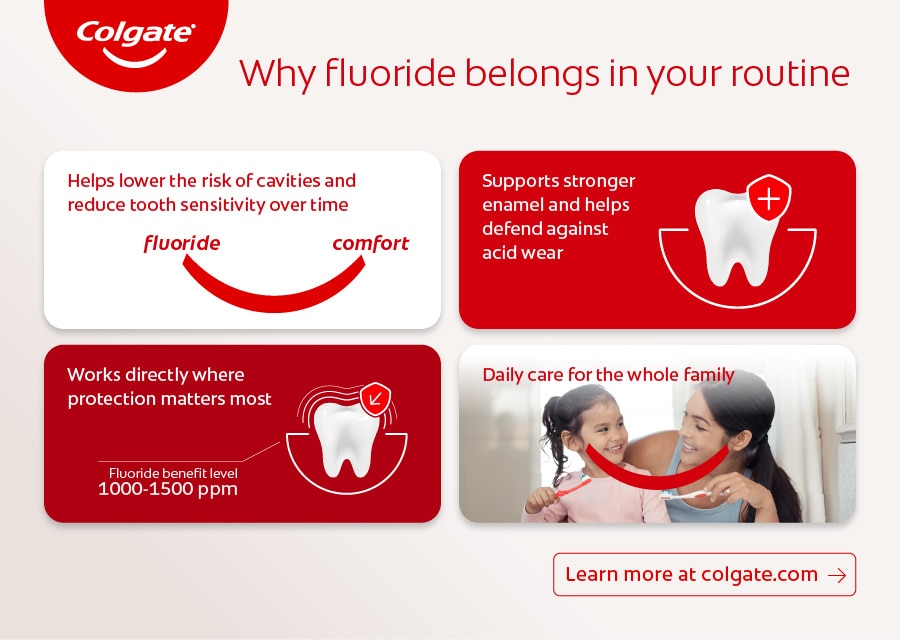
When used properly, fluoride is safe and highly effective for cavity prevention. According to global dental guidelines, optimal fluoride levels are 0.7 mg/L in drinking water and 1000–1500 ppm in toothpaste. As a result, children and adults benefit from consistent fluoride exposure without risk of overuse.
Interesting facts about fluoride effective use:
Fluoride rebuilds the tooth surface by attracting calcium and phosphate back into weakened enamel, forms acid-resistant fluorapatite, and reduces bacteria’s ability to produce acid.
Yes. In its earliest stages, fluoride can help remineralize enamel and stop a cavity from forming.
Yes. According to dental recommendations, fluoride in toothpaste is safe and effective when used as directed.
Most do. Always check the label for fluoride compounds such as sodium fluoride or stannous fluoride for proven protection.
This article is intended to promote understanding and knowledge about general oral health topics. It is not intended to be a substitute for professional advice, diagnosis or treatment. Always seek the advice of your dentist or other qualified healthcare provider with any questions you may have regarding a medical condition or treatment.
ORAL HEALTH QUIZ
Take our Oral Health assessment to get the most from your oral care routine
ORAL HEALTH QUIZ
Take our Oral Health assessment to get the most from your oral care routine

Discover if whitening toothpaste is right for you: understand its effectiveness and safety to choose the best product for your dental health.

Looking for a way to brighten your smile with teeth whitening? Learn more about both UV and blue light teeth whitening to decide which is the best option for you.

By: Mandy Dennis
Registered Dental Hygienist

A brighter smile can boost your confidence, consider a professional enamel microabrasion. Click here to learn more about enamel microabrasion with Colgate®.