GLP-1 Bad Breath: Why It Happens and How to Fix It
9
min read

Key takeaways:
GLP-1 medications — including semaglutide (available as injectable and oral formulations) and tirzepatide — could cause dry mouth by reducing fluid intake, suppressing thirst, and triggering nausea, all of which lower saliva production. Reduced saliva raises the risk of tooth decay and gum disease. Symptoms often improve within 4–16 weeks. Hydration and consistent oral hygiene are the primary management strategies.
"GLP-1 bad breath" — sometimes called "GLP-1 halitosis" or colloquially referred to in patient communities as a form of weight loss medication bad breath — is not an official clinical diagnosis. It is a term used to describe persistent oral odor reported by patients taking GLP-1 receptor agonist drugs, including semaglutide-based and tirzepatide-based formulations. Halitosis does not appear as a labeled side effect in the clinical prescribing information for these medications, yet it is reported frequently enough to surface regularly in dental and endocrinology follow-up visits.
These medications work by mimicking glucagon-like peptide-1, a naturally occurring gut hormone that regulates blood sugar, slows gastric emptying, and suppresses appetite. They do not generate foul-smelling compounds directly. Instead, they create downstream biological conditions — reduced saliva flow, slowed digestion, and shifts in fat metabolism — that collectively enable odor-producing molecules to accumulate in the oral cavity and upper digestive tract.
Because the origin is partly gastrointestinal, semaglutide bad breath often persists despite regular brushing, which distinguishes it from ordinary mouth odor linked to poor hygiene. Understanding that distinction is the essential first step toward effective management — and it is one that Colgate's oral health experts are here to help you navigate with confidence.
There is no single reason why patients on GLP-1 receptor agonist drugs develop chronic bad breath. Research and clinical observation point to three primary biological pathways — and in many patients, all three operate simultaneously. Identifying which mechanism is dominant in your specific case is the most efficient route to targeted, lasting relief.
GLP-1 medications suppress not only appetite but also thirst signals, leading patients to drink less water unintentionally throughout the day. The result is a measurable reduction in saliva production — a condition known clinically as hyposalivation or xerostomia. This is one of the most direct drivers of GLP-1 dry mouth and the oral odor that can follow.
Saliva plays three critical protective roles in the mouth: it mechanically rinses away food debris and bacteria, neutralizes acid, and keeps the oral microbial environment in balance. When saliva decreases, specific odor-causing bacteria multiply quickly. These bacteria produce volatile sulfur compounds (VSCs). the exact same chemicals that give rotten eggs their smell. The experience is similar to waking up with "morning breath," except it persists throughout the entire day.
The practical implication is important: no amount of extra brushing compensates for insufficient saliva. Rehydration is the first-line intervention; every milliliter of additional fluid and stimulated saliva helps to reduce the bacterial load responsible for VSC production.
[IMAGE] — Diagram illustrating the cycle: reduced saliva → bacterial overgrowth → VSC production → bad breath.
Slowing the rate at which food leaves the stomach is not a side effect of GLP-1 drugs — it is a deliberate therapeutic mechanism that prolongs satiety and moderates post-meal blood sugar spikes. However, this same process creates the conditions for delayed gastric emptying bad breath. In clinical trials of semaglutide conducted by Novo Nordisk, approximately 9% of patients reported frequent eructation (burping), making sulfur burps one of the more widely recognized GI-related complaints among users of these medications.
When food remains in the stomach for an extended period, partial bacterial fermentation occurs. This fermentation generates sulfurous gases — predominantly hydrogen sulfide and methyl mercaptan — the same compounds responsible for the classic "rotten egg" odor. During GLP-1 burping, these gases travel up through the esophagus and are expelled through the mouth. Technically, this stems from semaglutide-related eructation rather than true oral halitosis — but the olfactory effect is indistinguishable, and in some patients, even more intense. Foods high in sulfur compounds (garlic, onions, eggs, cruciferous vegetables) amplify this effect significantly.
Because the odor source is gastric rather than oral, standard oral hygiene products provide minimal relief for this particular mechanism. Meal management — smaller portions, mindful food choices, and appropriate timing — is the most effective intervention. Noticing that the worst odor episodes coincide with burping is a strong indicator that gastric fermentation, not oral bacteria, is the primary driver.
The appetite suppression induced by GLP-1 medications frequently leads patients to reduce their carbohydrate intake substantially — sometimes deliberately as part of a weight-loss plan, and sometimes inadvertently because food simply becomes less appealing. When glycogen reserves are depleted, the body shifts to metabolizing stored fat as its primary fuel source and begins producing ketone bodies as a byproduct.
Acetone, a volatile ketone, is excreted through the lungs alongside exhaled air, producing a distinctive odor often described as fruity breath, metallic, or reminiscent of nail polish remover. This is keto breath — GLP-1-related halitosis from fat metabolism. It's metabolic in origin rather than oral, and it doesn't respond to mouthwash, brushing, or tongue scraping. If your breath carries a sweet or chemical quality rather than a sulfurous one, nutritional ketosis is most likely the dominant cause.
The practical fix is straightforward: adding 15–30 grams of slow-release complex carbohydrates (such as oats or legumes) once daily typically reduces acetone breath within 24 to 72 hours, without meaningfully compromising weight-loss outcomes. This targeted dietary adjustment is generally preferable to attempting to mask the odor with breath products.
Beyond the three primary pathways, a set of secondary mechanisms contributes to GLP-1 gastrointestinal side effects that affect oral odor. The slowing of gastric emptying increases intragastric pressure over time, which predisposes some patients to gastroesophageal reflux (GERD). When stomach acid and partially digested food travel back into the esophagus and oral cavity, they introduce additional volatile acids and volatile sulfur compounds, compounding the odor burden. The documented nausea and vomiting associated with GLP-1 therapy — particularly during dose escalation — directly expose tooth enamel to gastric acid and introduce malodorous compounds into the mouth.
Additionally, the overall reduction in food intake alters gut microbiome composition, which can shift bacterial fermentation patterns in the intestinal tract and increase gaseous eructation. Gut microbiome halitosis from this pathway is less well-characterized but is increasingly recognized by clinicians as a contributing factor, especially in patients with significant GI symptoms.
Clinical note: Persistent reflux symptoms should always be reported to your prescribing physician. Avoid self-medicating with antacids without medical guidance, and allow a minimum of 3–4 hours between your last meal and bedtime to reduce overnight acid exposure.
The odor associated with GLP-1 bad breath is not uniform — it varies based on which biological mechanism is dominant. Patients describe it as sulfurous and reminiscent of rotten eggs or sewage when gastric fermentation is the primary driver, and as fruity breath, metallic, or chemically sharp when ketosis is at work. GLP-1 fishy breath descriptions most often correspond to the action of VSCs produced by oral anaerobic bacteria under dry-mouth conditions. Identifying your specific odor type is a practical first diagnostic step. The table below maps odor descriptions to their likely source and the most appropriate initial action.
| Odor Description | Likely Source | Priority Action |
|---|---|---|
| Sulfur / rotten egg smell / sewage | Delayed gastric emptying and bacterial fermentation | Smaller meals, avoid sulfur-rich foods, increase hydration |
| Fishy / drain-like | Volatile sulfur compounds from dry-mouth bacteria | Increase water intake, tongue scraping, fluoride toothpaste |
| Fruity / metallic / nail polish remover | Ketosis — acetone exhalation via lungs | Add 15–30 g slow-release carbs daily, reassess dietary plan |
| Sour / acidic | Acid reflux / GERD secondary to delayed gastric emptying | Avoid eating 3–4 hours before bed, consult your physician |

Both keto breath and GLP-1 bad breath can involve ketosis, and patients who follow a low-carbohydrate diet alongside their GLP-1 medication may experience elements of both simultaneously. However, they differ meaningfully in origin, odor profile, and treatment. Pure keto breath results exclusively from voluntary, intense carbohydrate restriction; the body enters ketosis, and acetone is exhaled via the lungs. GLP-1-related bad breath incorporates ketosis as only one of three possible mechanisms, layering on top of it the xerostomia-induced bacterial VSC production and the gastric fermentation gases specific to delayed emptying. The result is often a more complex, mixed odor that resists simple remedies.
The practical implication for treatment is significant: a patient experiencing keto breath without GLP-1 therapy can typically resolve the odor by moderately increasing carbohydrate intake. A patient on a GLP-1 receptor agonist must simultaneously address hydration, oral hygiene, and meal management. Adjusting carbs alone will reduce only the acetone breath component and leave the other two pathways unaddressed.
| Characteristic | Keto Breath | GLP-1 / Weight-Loss Medication Breath |
|---|---|---|
| Primary odor | Fruity, metallic, acetone-like | Sulfur, fishy, sour OR fruity (mixed) |
| Source | Ketone bodies (acetone) exhaled via lungs | Ketones and oral VSCs and gastric fermentation gases |
| Oral hygiene fixes it? | Partially (reduces oral VSCs) | No — GI component persists despite brushing |
| Main fix | Increase carbohydrate intake | Hydration and oral hygiene and meal management (combined) |
| Linked to medication? | No | Yes — GLP-1 receptor agonists |
Managing GLP-1 bad breath treatment effectively requires targeting all three biological mechanisms at once. No single product or habit change produces lasting results in isolation — the odor's gastrointestinal component means that GLP-1 halitosis will continue even with immaculate oral hygiene if hydration and meal management are neglected. The following ten-step protocol addresses each mechanism in order of clinical priority and is designed to fit within a realistic daily routine.
Bad breath is the most commonly reported oral complaint among patients using GLP-1 receptor agonist medications, but it represents only the most visible symptom of a broader oral health challenge. The informal terms "GLP-1 mouth" and "GLP-1 teeth" — increasingly used in patient communities and beginning to appear in dental literature — describe a cluster of oral conditions that can develop when GLP-1 oral health risks go unaddressed over months of treatment.
The central mechanism linking all these conditions is prolonged xerostomia. Saliva is the mouth's primary natural defense; it neutralizes acid, remineralizes enamel, controls microbial populations, and lubricates tissues. When GLP-1-induced thirst suppression reduces fluid intake and salivary output over weeks and months, the protective buffer that saliva provides is progressively eroded. Simultaneously, vomiting enamel erosion caused by GI side effects and acid reflux from gastroparesis expose dental surfaces to corrosive gastric acid. Nutritional changes associated with reduced appetite — including potential deficiencies in calcium and vitamin D — may further compromise alveolar bone density over time. Patients on long-term GLP-1 therapy should be considered an elevated-risk group for oral complications and managed with the same proactive surveillance applied to patients undergoing chemotherapy or head-and-neck radiotherapy.
| Condition | Mechanism | Preventive Action |
|---|---|---|
| Bad breath (GLP-1 halitosis) | Dry mouth, gastric fermentation, ketosis | Hydration, tongue scraping, fluoride toothpaste |
| Semaglutide tooth decay (caries) | Reduced saliva → acid accumulation on enamel | Fluoride toothpaste, reduced sugar intake, dental sealants |
| GLP-1 enamel erosion | Acid reflux and dietary acid exposure | Avoid brushing immediately after reflux; rinse with water first |
| GLP-1 gum disease (gingivitis / periodontitis) | Bacterial overgrowth driven by dry-mouth conditions | Daily flossing, antibacterial mouthwash, professional cleaning |
| Tooth sensitivity | Enamel thinning from sustained acid exposure | Sensitivity toothpaste with potassium nitrate or stannous fluoride |
| Xerostomia (dry mouth) | Thirst suppression → chronically reduced fluid intake | Consistent hydration, saliva substitutes, nighttime humidifier |
The majority of patients who develop GLP-1 bad breath will find that consistent application of the hydration, hygiene, and dietary strategies described above produces meaningful improvement within two to four weeks. However, some situations require professional evaluation rather than — or alongside — home management. Knowing when to escalate is as important as knowing what to do at home.
Dr. Anita Aminoshariae of Case Western Reserve University School of Dental Medicine has emphasized that oral health conversations should be integrated into the GLP-1 prescribing process, not left to arise reactively at a dental appointment. The American Dental Association (ADA) similarly underscores that dental professionals need to be aware of a patient's full medication profile to provide appropriate preventive care and calibrate recall intervals. The guidance below reflects both clinical consensus and the practical experience reported across dental and endocrinology practices managing GLP-1 patients.
Semaglutide does not directly cause bad breath as a pharmacological effect. However, it produces three biological conditions — reduced saliva flow, delayed gastric emptying, and a shift toward fat metabolism — that collectively create the environment in which odor-producing molecules accumulate. Halitosis is not a labeled side effect of semaglutide, but it is consistently reported by patients and recognized by dental and medical professionals as a clinically relevant concern associated with long-term use.
GLP-1 bad breath has no single odor profile. Patients describe sulfurous or rotten-egg smells when gastric fermentation is dominant; fishy or drain-like odors when oral bacteria under dry-mouth conditions produce VSCs; and fruity breath or a nail-polish-remover quality when the body is in nutritional ketosis. A sour or acidic quality typically points to acid reflux secondary to delayed gastric emptying. The odor type is a useful first indicator of the underlying mechanism.
Duration depends on the mechanism and on how consistently management strategies are applied. Ketosis-related acetone breath typically resolves within 24–72 hours of adding slow-release carbohydrates. Dry-mouth-related halitosis improves progressively with sustained hydration and enhanced oral hygiene over 1–3 weeks. Gastric fermentation odors tend to fluctuate with meal choices and portion sizes. For patients who remain on GLP-1 therapy long-term, the underlying biological conditions persist, meaning that ongoing management — not a one-time fix — is required.
In most cases, GLP-1 halitosis is a manageable inconvenience rather than a medical emergency. It becomes a concern requiring prompt professional evaluation when accompanied by signs of significant dehydration, severe abdominal symptoms, inability to keep fluids down, or rapidly worsening oral health (new cavities, bleeding gums, visible enamel loss). Persistent bad breath that does not respond to 4–6 weeks of consistent oral hygiene improvement warrants a dental visit for professional assessment.
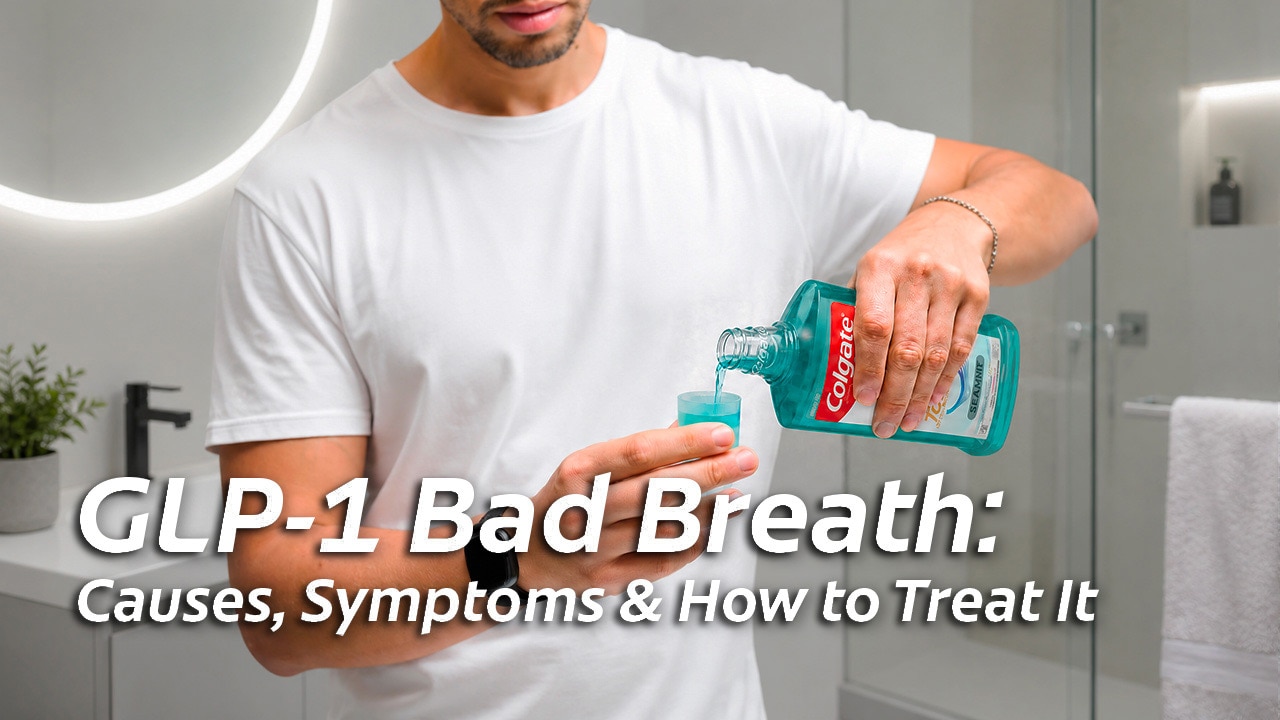
Mouthwash alone cannot resolve GLP-1 bad breath because it addresses only the oral bacterial component and does not reach the gastric or metabolic sources of the odor. An alcohol-free mouthwash containing an active antibacterial agent such as cetylpyridinium chloride (CPC) is a valuable part of a comprehensive routine. It reduces the VSC-producing bacterial population on teeth and gum surfaces. Used alongside proper hydration, tongue scraping, and meal management, it contributes meaningfully to odor reduction. Used in isolation, its effect is temporary and cosmetic.
Yes — always, and at every visit. The specific medication you're prescribed directly influences your risk profile for xerostomia, enamel erosion, periodontal disease, and caries. Knowing you are on a GLP-1 receptor agonist allows your dental team to proactively screen for these conditions, recommend appropriate preventive measures, and increase the frequency of your recall appointments (your dentist can advise on how often you should visit). This is one of the most impactful — and simplest — actions you can take to protect your oral health while on long-term GLP-1 therapy.
This article is intended to promote understanding and knowledge about general oral health topics. It is not intended to be a substitute for professional advice, diagnosis or treatment. Always seek the advice of your dentist or other qualified healthcare provider with any questions you may have regarding a medical condition or treatment
ORAL HEALTH QUIZ
Take our Oral Health assessment to get the most from your oral care routine
ORAL HEALTH QUIZ
Take our Oral Health assessment to get the most from your oral care routine

Dry mouth may be a result of menopause and can have an effect on your overall health. Find out more about you can deal with hormonal shifts and dry mouth.
.jpeg)
Most cases of dry mouth after surgery are temporary. If the problem lingers, you may need to see a dentist. Check out these symptoms and treatments.

Dry mouth toothpaste can stave off discomfort and potential health issues. Find out if dry mouth toothpaste can be the remedy for your dry mouth.

Your salivary glands, which produce saliva, play a critical role in not just your oral health, but your overall health. Learn how to keep them healthy.
Colgate Total® Clean Mint Toothpaste fights bacteria, the root cause of many oral health issues such as gingivitis, tartar, sensitivity, weak enamel, bad breath, and cavities.
Colgate Total Whitening Gel Toothpaste fights bacteria, the root cause of many oral health issues such as gingivitis, tartar, sensitivity, weak enamel, bad breath, and cavities.
Colgate Total Whitening Toothpaste fights bacteria, the root cause of many oral health issues such as gingivitis, tartar, sensitivity, weak enamel, bad breath, and cavities.
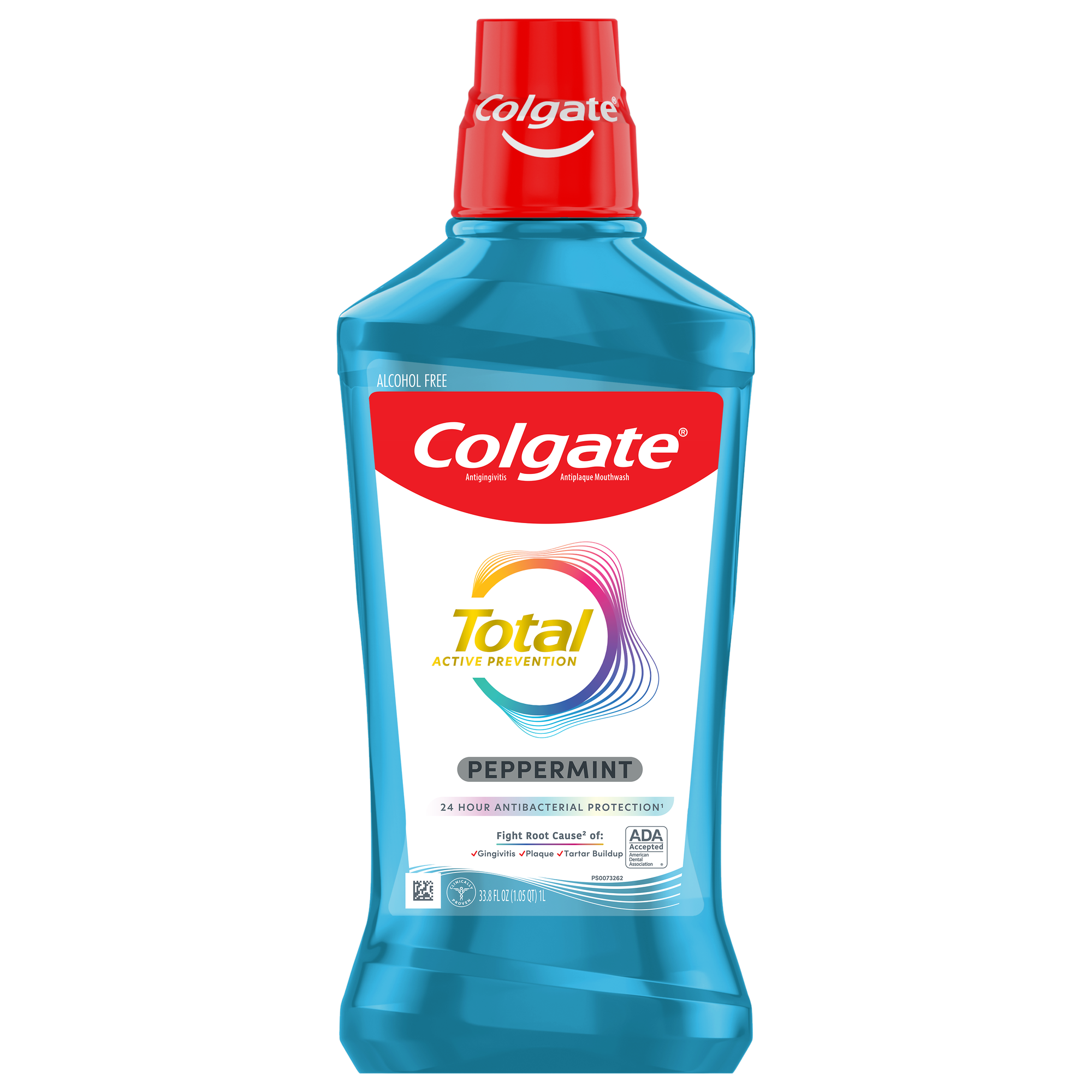
Colgate Total Alcohol Free* Peppermint Mouthwash delivers 24-hour protection** against bacteria.

