Root Canal Pain: What to Expect
4
min read


It's important to remember that the root canal treatment goal isn't to cause you pain but to relieve pain caused by tooth decay and infection. If you do feel severe pain after root canal, it could be an indication that something has gone wrong with the tooth or the treatment. Let your general dentist or endodontist, a dentist who specializes in performing root canal therapy, know so they can rule out a complication or give it the attention needed to help you on the road to recovery.
You can expect to have some mild to moderate pain or soreness in the area after a root canal treatment. As your body heals, the area around the tooth might feel a bit sore and tender, explains the American Association of Endodontists. Some people also have a sore jaw after their root canal(s), since the procedure requires them to have their mouths open for a longer period.
How you care for the tooth and the rest of your mouth after a root canal can be an essential factor in the amount of pain you might feel. After your root canal, proper care includes good oral hygiene and following up with your dentist to restore the tooth that underwent root canal therapy. It is common for your dentist to place a crown or filling to protect the treated tooth. Avoid chewing on the treated tooth until the crown is placed. When your dentist says it's fine to brush your teeth again, it is best to use a soft-bristled toothbrush. It's also a good idea to wait until any anesthetic the dentist gave you during the root canal wears off before you resume eating and drinking. If you eat while your teeth and gums are still numb, you might accidentally bite your inner cheeks or tongue.
If you expect some discomfort as your body heals after a root canal, how do you know if you're experiencing too much pain? There are a few ways to tell. If the pain you're feeling is so severe that you can't go about your normal life, you should contact your dentist immediately. Sometimes, complications can develop after a root canal. Symptoms may include severe pain, fever, swelling, an uneven bite (when you bite down, the treated tooth feels "high"), or you feel unwell. It is important to rule out infection, tooth cracks or fractures that can affect the healing process.
While root canal therapy is highly successful, some cases require retreatment, usually due to recurrent bacterial infection. In these cases, your dentist will identify the cause of the infection and rule out tooth or root cracks or fractures. Retreatment is usually enough to ease pain and discomfort, but there are instances when the best option is to remove the tooth. Your dentist can thoroughly explain each option's pros and cons and advise you on the best course of action so that you can make the best decision.
There’s nothing to fear about a root canal treatment, but your best chance of dealing with unusual pain is communicating with your dentist. Contact your general dentist or endodontist immediately if you are feeling severe pain several days after your root canal. Your dentist can examine your tooth and get you on the right track to feeling your best.
Oral Care Center articles are reviewed by an oral health medical professional. This information is for educational purposes only. This content is not intended to be a substitute for professional medical advice, diagnosis or treatment. Always seek the advice of your dentist, physician or other qualified healthcare provider.
ORAL HEALTH QUIZ
Take our Oral Health assessment to get the most from your oral care routine

What is pulp capping and why may your dentist recommend a cap for you or your child? Learn more, here.
Teeth or crowns may flex or move. This movement can lead to fracture. The ferrule effect helps reduce the risk of the tooth fracturing, though it doesn't guarantee it.

A pulpotomy is a procedure a dentist may use to preserve your tooth when portions of a tooth's pulp is injured. Learn more, here.

Before you undergo dental treatment, your dentist or medical provider may recommend antibiotic prophylaxis. Learn what it is and how it works.
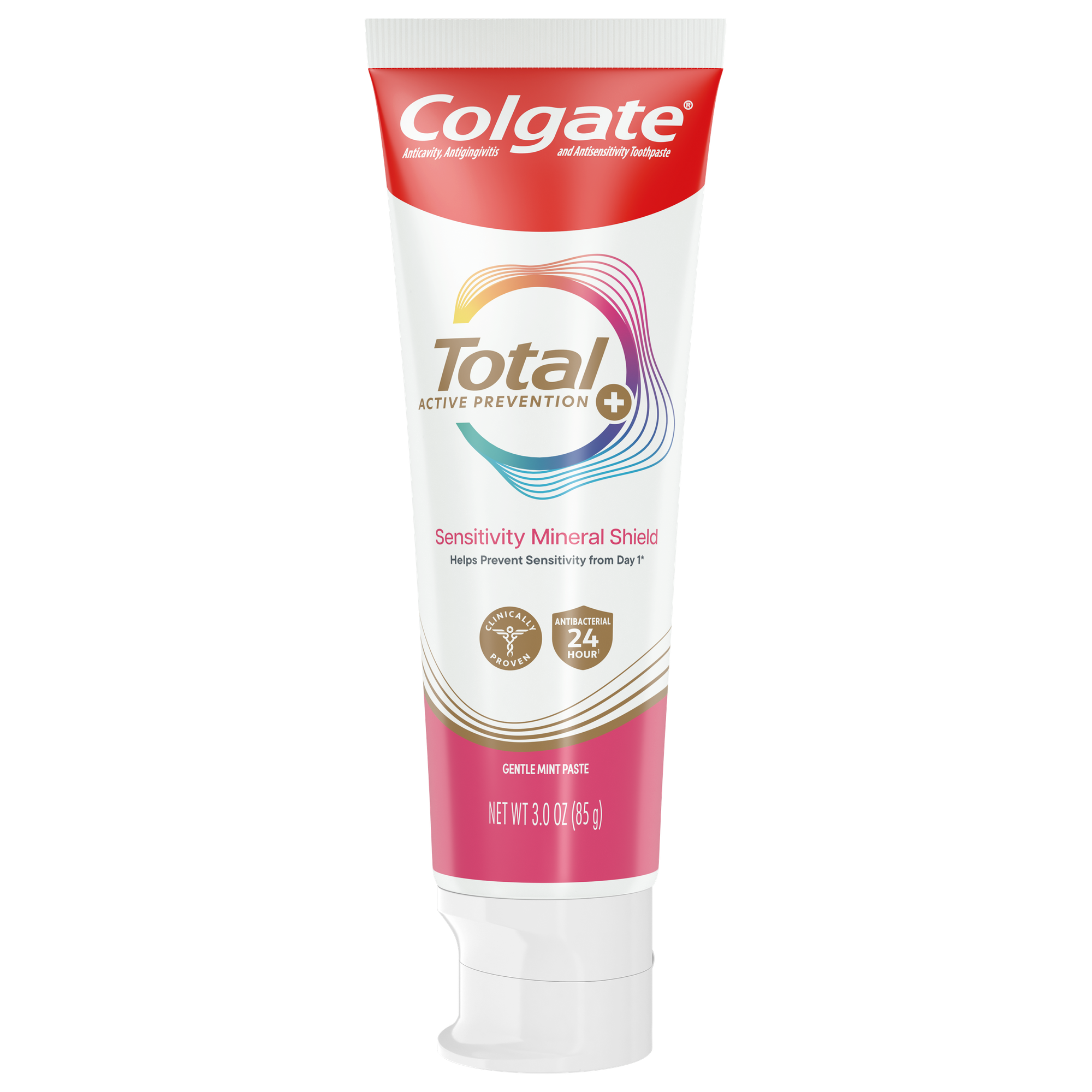
Help prevent sensitivity from day 1* with Colgate Total Active Prevention Sensitivity Mineral Shield Mint Toothpaste.
*with twice daily use
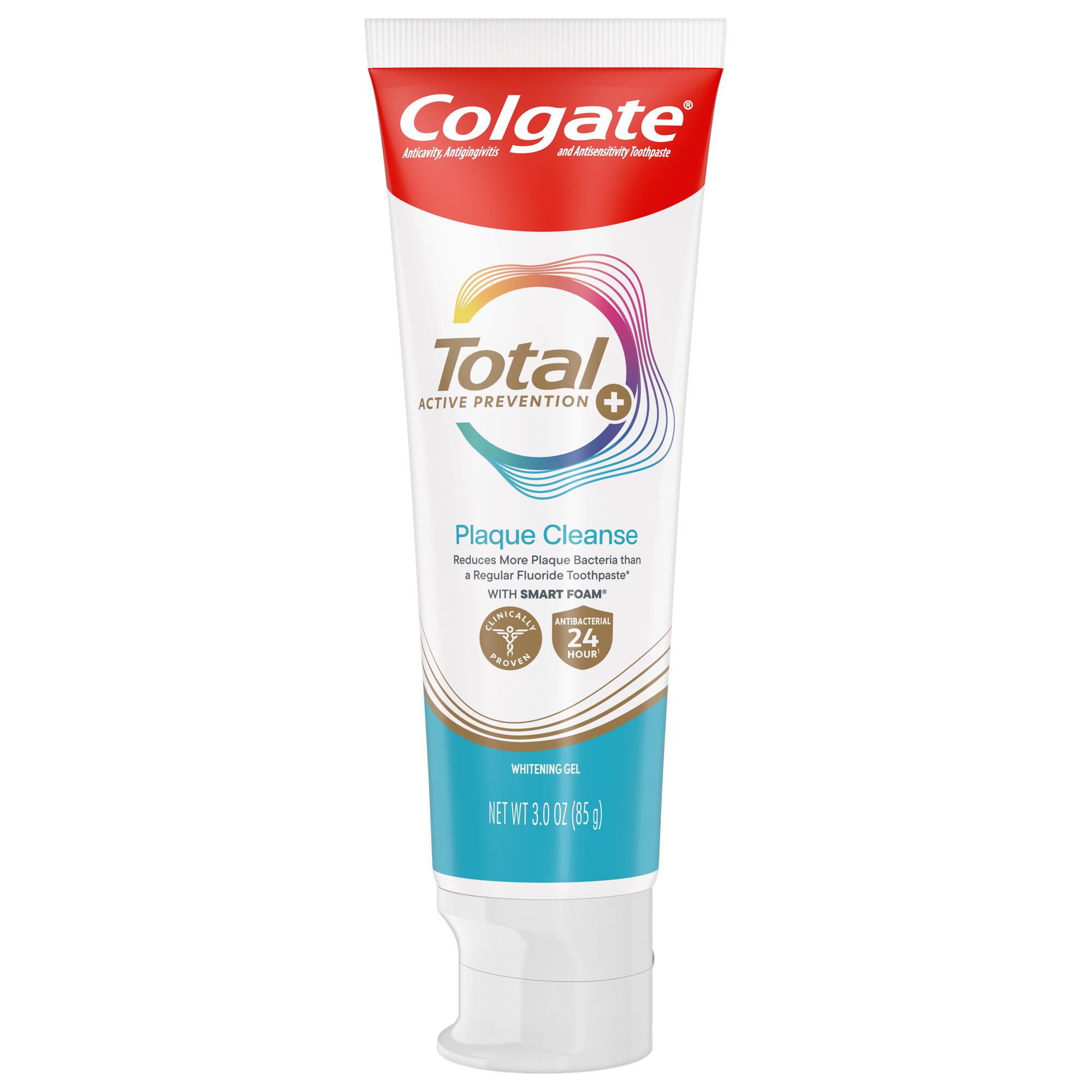
Help promote healthy gums using Colgate Total Active Prevention Plaque Cleanse Whitening Toothpaste Gel. This patented tartar prevention toothpaste fights the root cause* of gingivitis, plaque, tartar, cavities, sensitivity, bad breath, weak enamel, and stains and is 2x more effective*** at fighting bacteria, the root cause of oral health problems like cavities and gingivitis.
*via protection against bacteria and dietary exposures, with daily brushing
***via reduction of bacteria vs. non-antibacterial fluoride toothpaste with 2x daily brushing and 4 weeks use
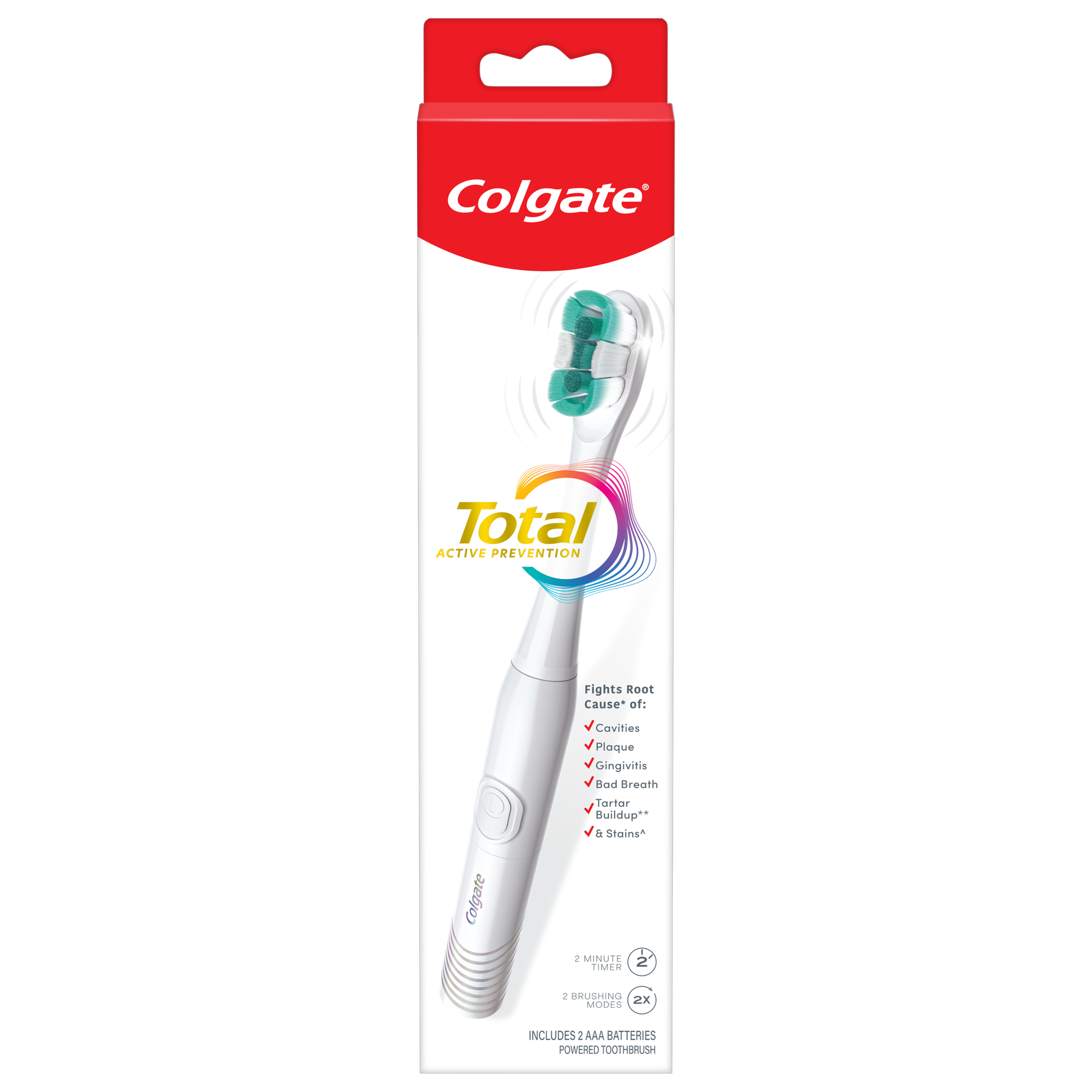
Colgate Total Active Prevention Battery Powered Electric Toothbrush, WhitePower away plaque with Colgate Total Battery Powered Toothbrush.
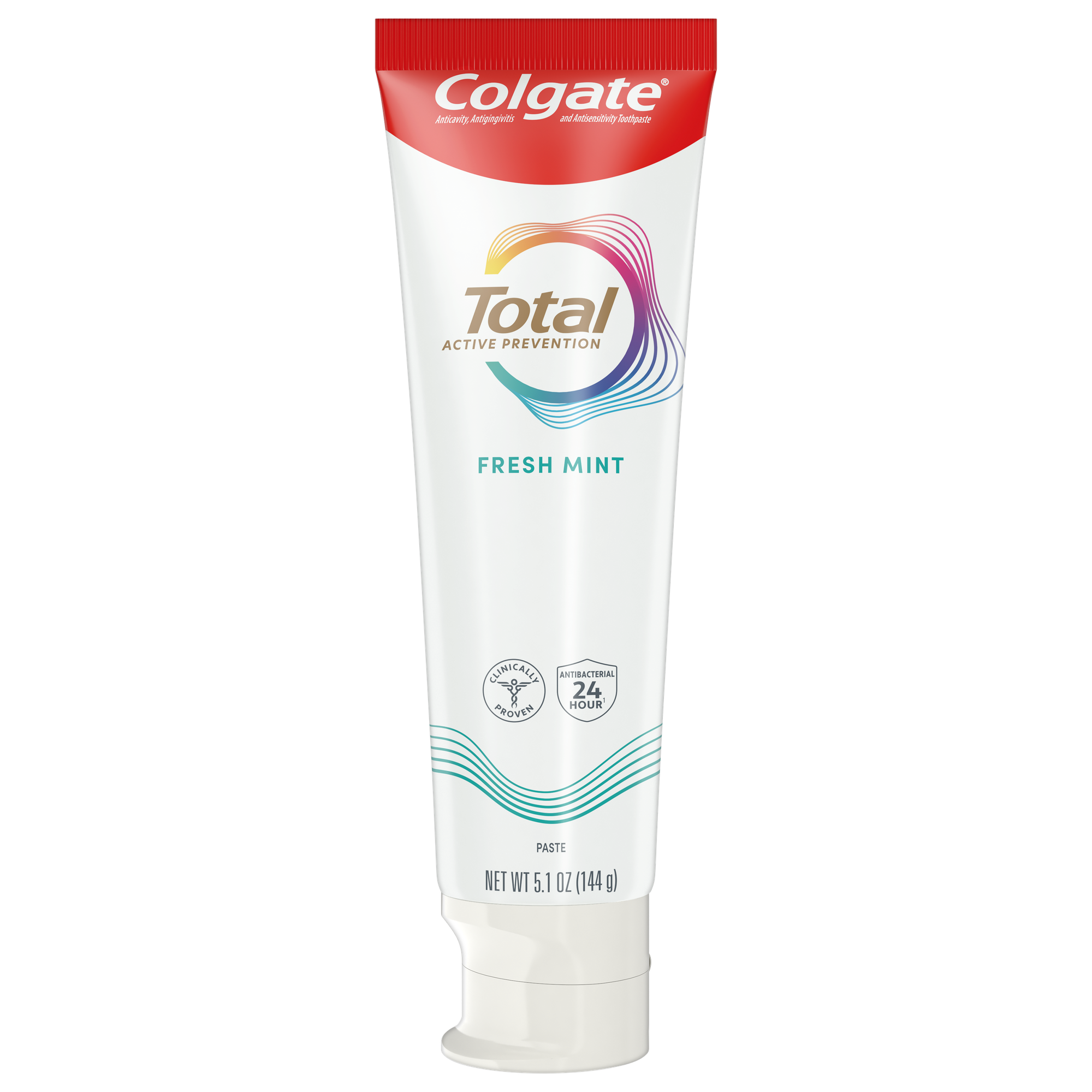
Colgate Total Fresh Mint Toothpaste fights bacteria, the root cause of many oral health issues such as gingivitis, tartar, sensitivity, weak enamel, bad breath, and cavities.


About Cookies on This Site

