Kids toothpaste: a guide to fluoride and early oral care
min read

In this article:
Key takeaways:
The professional recommendation is to start brushing your child's teeth as soon as the first one emerges, typically around six months of age. This early intervention is critical because tooth decay can start as soon as teeth appear in the mouth.
Statistics from the American Dental Association (ADA), which is a global reference in oral health, indicate that 25% of children have at least one cavity by the time they start kindergarten. Establishing a consistent morning and night routine helps protect primary teeth, which hold space for permanent ones.
Fluoride toothpaste such as the varieties available from Colgate, plays a significant and positive role in this process.
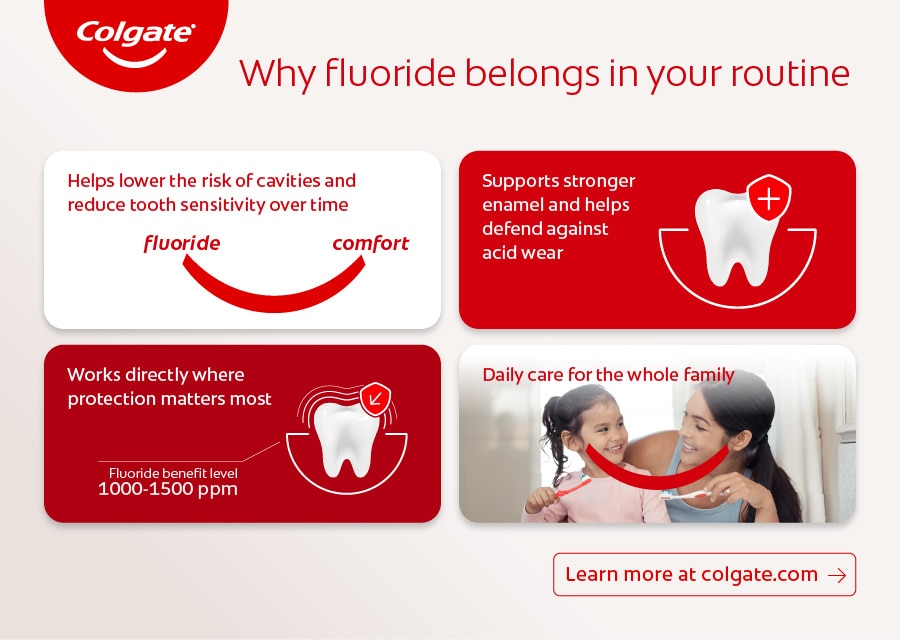
Fluoride is a naturally occurring mineral in many foods and water that prevents tooth decay, reverses early decay and remineralizes your tooth enamel. In practice, it is the primary defense against cavity formation in both children and adults.
Babies benefit from fluoride in food and drink even before their first tooth appears. It helps strengthen the enamel of primary teeth while they are still developing in the jaw.
Fluoride stays crucial for children as their primary teeth develop because it aids in repairing damage that can be started by acids released by cavity-causing bacteria in the mouth. Therefore, consistent use of fluoride toothpaste is important.
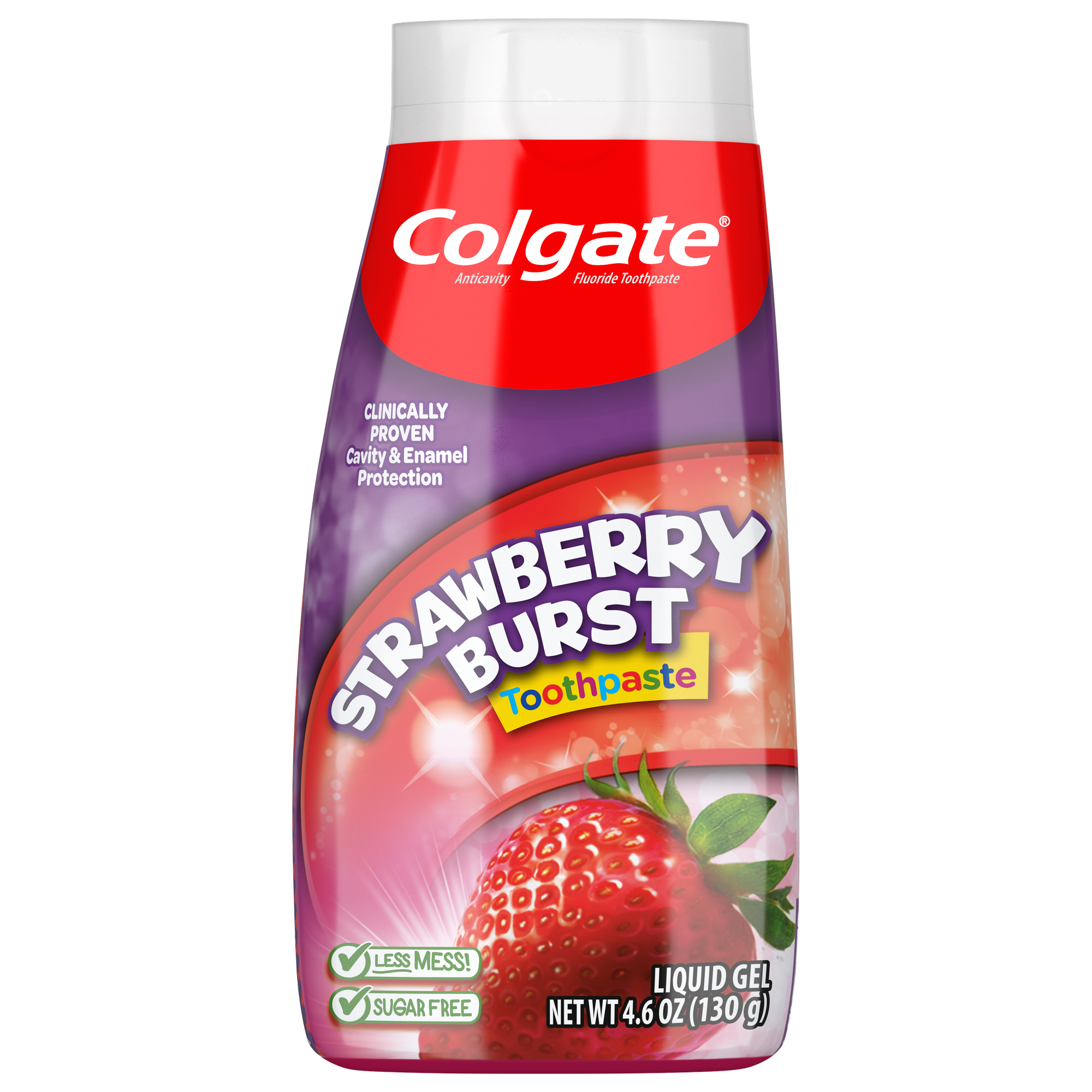
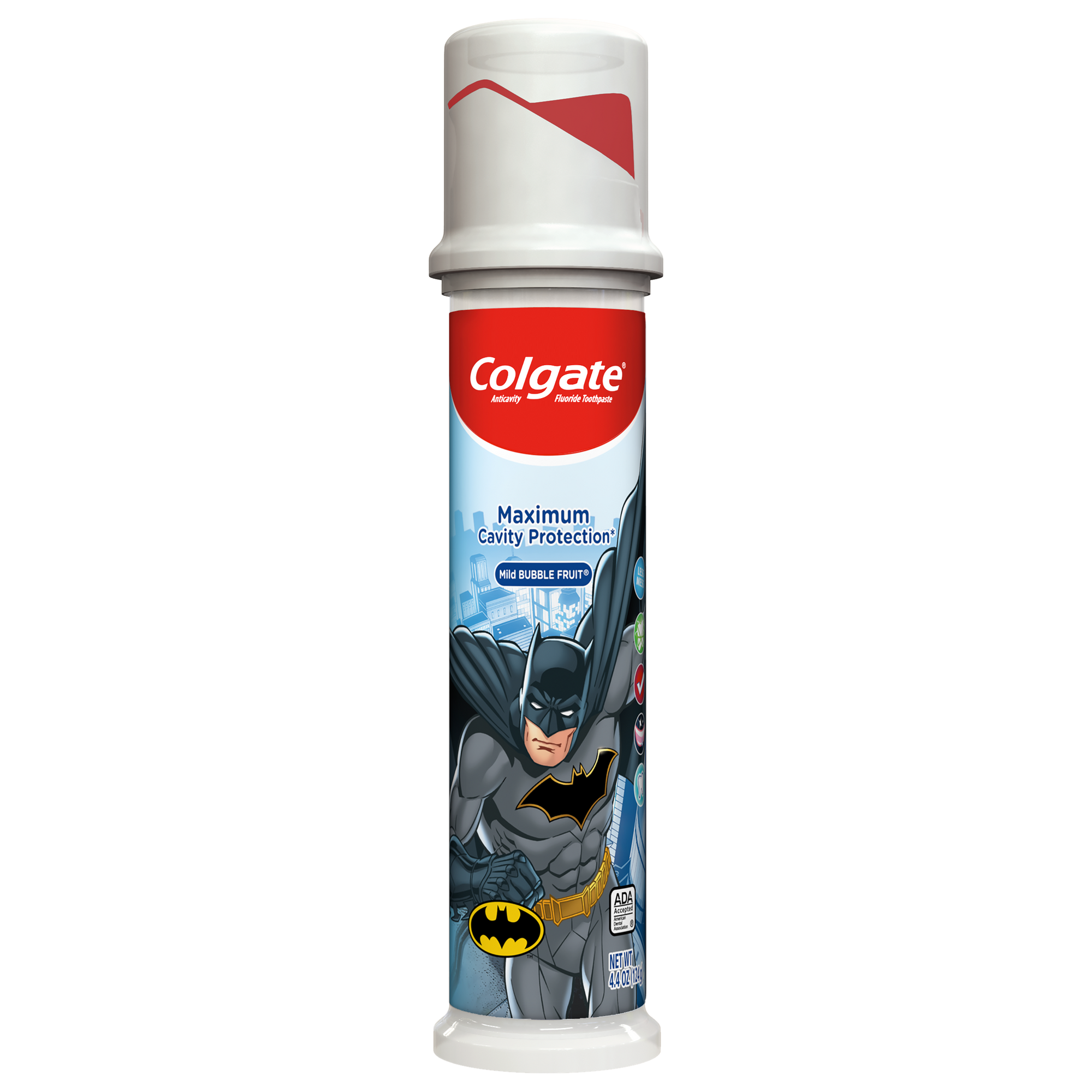
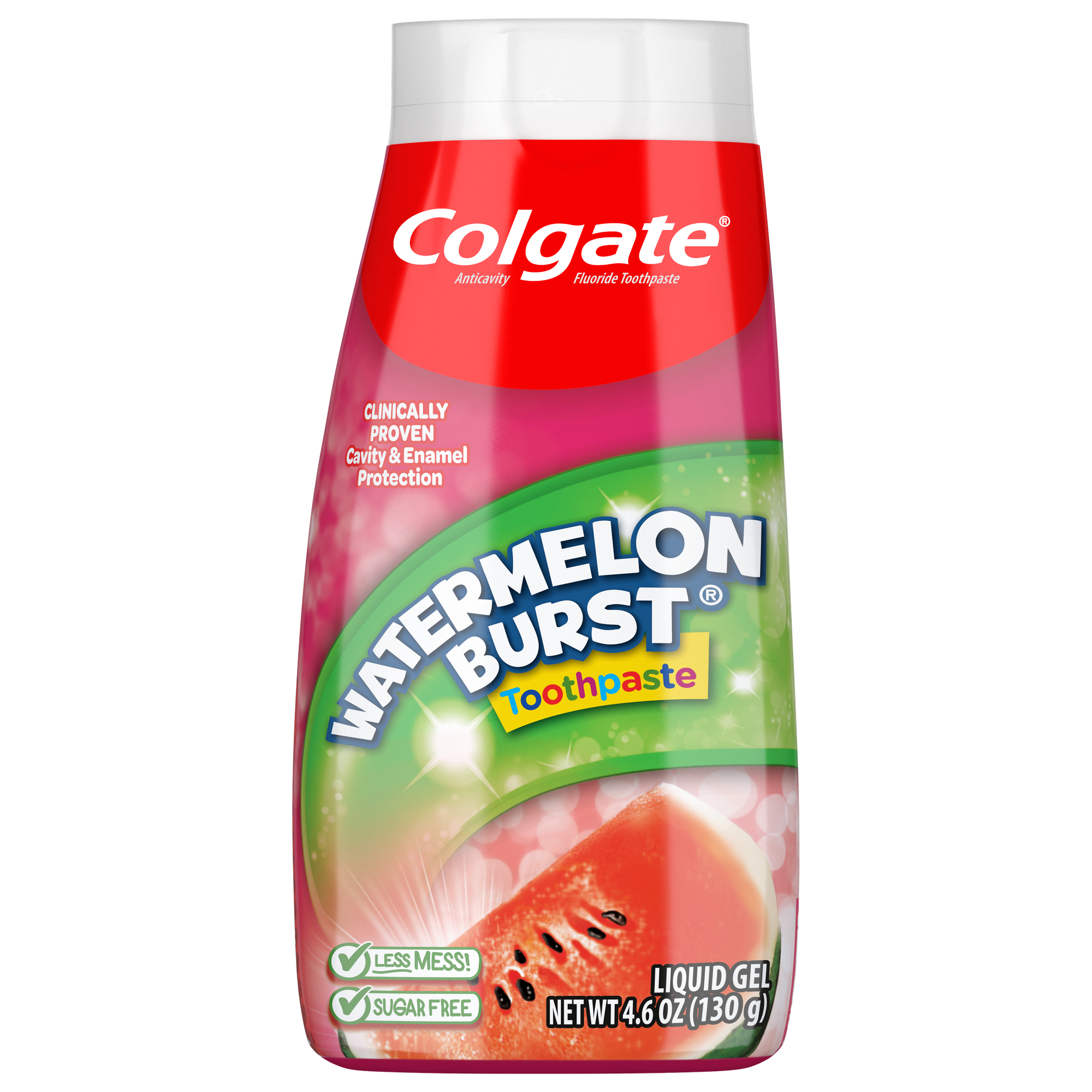
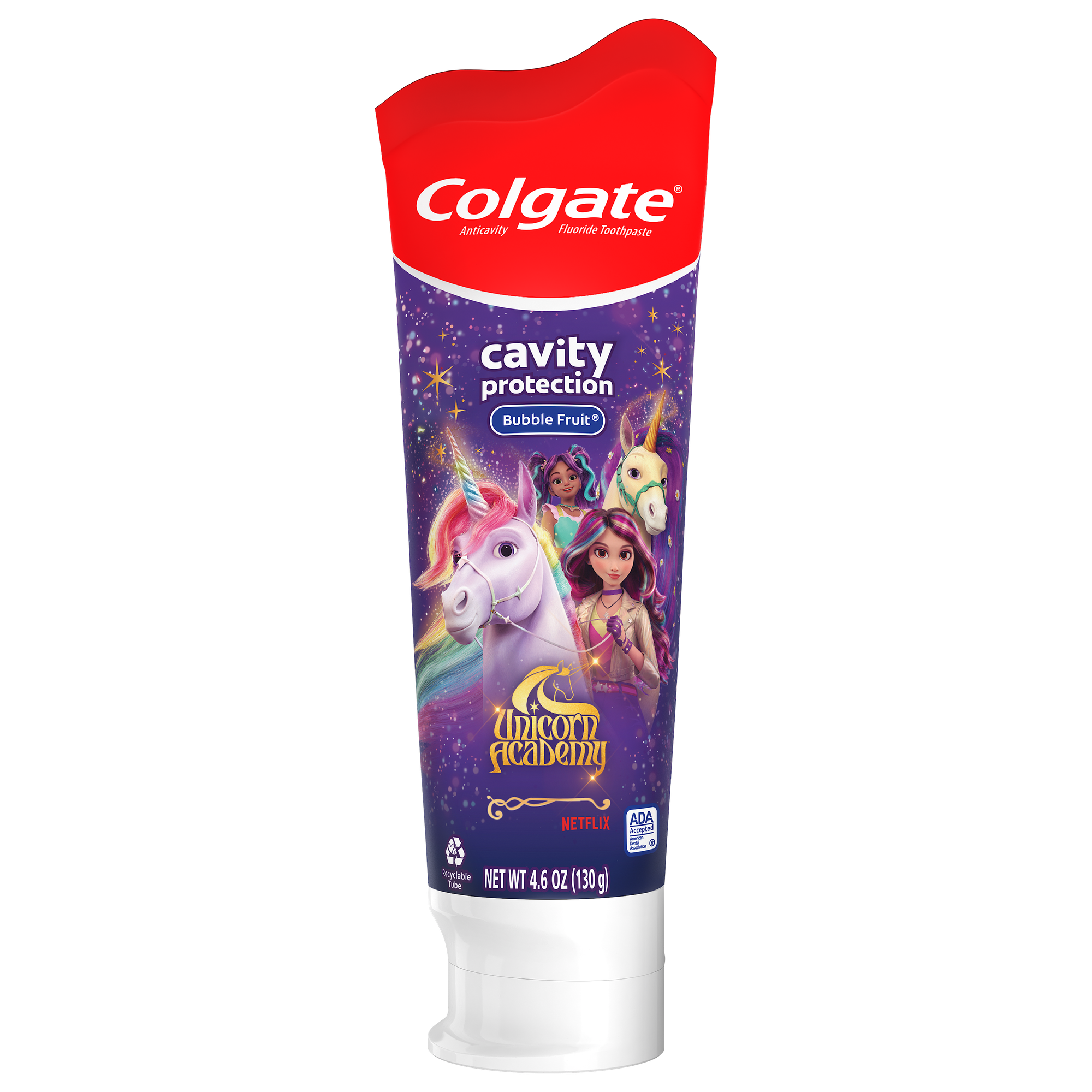
At Colgate, we developed fluoride toothpaste for kids.
The amount of fluoride toothpaste your child needs depends entirely on their age to ensure they get enough fluoride without over-exposure. For optimal results, follow these dosage rules:
For optimal results, follow these dosage rules:
Many parents ask about oral care for babies. To start practicing and to help develop good oral hygiene habits, use a soft-bristled infant toothbrush or finger brush and gently clean your baby's gums. Once teeth erupt, follow the instructions above.
A children's toothbrush with soft bristles is essential for effectively cleaning children's mouths without hurting the gum or other parts of the mouth. This is because using a toothbrush that is too large can prevent cleaning hard-to-reach areas where plaque accumulates.
An effective tip: making brushing fun—playing with light, singing, or adopting fun, professionally approved toothbrushes—encourages children to stick to the two-minute rule. Consult your dental professional to ensure the brush head size is appropriate for your child's current developmental stage.
You must supervise or perform the brushing for your child until they are at least seven years old. Most young children lack the manual dexterity to remove all bacterial plaque independently.
A common concern for parents is "can kids use adult toothpaste?". While technically safe if the child can spit effectively, adult toothpastes often have stronger flavors and higher fluoride concentrations.
Seals of approval and renowned products confirm that a kids toothpaste has been independently evaluated for safety and efficacy. Choosing a product with this seal gives you confidence that you are providing the best care for your child’s smile.
Empowering your child with the right tools and supervision today prevents complex dental issues tomorrow. And if you are wondering "when can a child use regular toothpaste?", the answer usually aligns with when they can reliably spit out all excess foam—typically around age six.
Children under three require a smear of fluoride toothpaste (the size of a rice grain). Children aged three to six should use a pea-sized amount twice daily.
Yes. If you prefer the flavor, you can use it, but be aware that it depends on your specific needs, as adult formulas often contain higher concentrations of ingredients for whitening or tartar control.
Do not panic if a small amount is ingested. If a large quantity is consumed, contact a healthcare provider or Poison Control immediately. Always encourage your child to spit after brushing.
This article is intended to promote understanding and knowledge about general oral health topics. It is not intended to be a substitute for professional advice, diagnosis or treatment. Always seek the advice of your dentist or other qualified healthcare provider with any questions you may have regarding a medical condition or treatment.
ORAL HEALTH QUIZ
Take our Oral Health assessment to get the most from your oral care routine
ORAL HEALTH QUIZ
Take our Oral Health assessment to get the most from your oral care routine

Discover if whitening toothpaste is right for you: understand its effectiveness and safety to choose the best product for your dental health.

Looking for a way to brighten your smile with teeth whitening? Learn more about both UV and blue light teeth whitening to decide which is the best option for you.

By: Mandy Dennis
Registered Dental Hygienist

A brighter smile can boost your confidence, consider a professional enamel microabrasion. Click here to learn more about enamel microabrasion with Colgate®.